PREMA JYOTHI - Newsletter of the Prema Trust and Sacred Earth Community – June 2026

Kia Ora Whanau
We live in an age of great turmoil. Each day reports come in about some disaster or war, famine and floods. As I write this Auckland is beset with wild winds from the cyclone. The last cyclone left Karekare without power for three weeks and we were unable to leave (due to road closures). How do we face such occurrences without losing our inner peace? How do we retain our equanimity in the midst of these great disturbances?
To allow fuller understanding of the route to equanimity, it is worth considering the word itself. The last potion of the word is ‘amity’. Amity means friendship, loving relationship or goodwill. ‘Equa’ of course means equal or same. Therefore, to gain equanimity we must live in amity with others. We must treat all as equal to ourselves. The golden rule ‘do unto others as you would have them do unto you’ applies here. But equanimity is much more than this.
Equanimity begins inside of ourselves
The development of equanimity starts with acceptance. Most difficult is self-acceptance. We tend to magnify our own faults in our minds, and struggle with self-love (see Feb 2024 newsletter). However, when we begin to create a space from, and perspective about, the one we think we are (mind, body, tendencies, etc.) we can come to a calm, equanimous place within us. Once that equanimity, which sees even our false perception of ourselves as simply a part of ‘what is’, we begin to become calmer and clearer. This is not to disregard self-development and spiritual growth, but to have a greater understanding of what is required for us to begin to know the Self – the One that is All. From that perspective we can begin to observe the waves of life with much greater understanding. Sai told a group of New Zealanders who were struggling with some issues within the Sai organisation, “First understanding, then adjustment”.
Often when we don’t understand ourselves; when we don’t know why we do certain things, or react in certain ways, it is a movement from agitation and puzzlement to equanimity that helps us readjust our way of looking at the issue. Such an attitude is difficult to develop within the stress and confusion of any situation. We struggle to find solution, or blame outer circumstances, people or even God! We can also turn that attitude of blame onto ourselves. How can we become equanimous in such a mess?
It is only in the Depth of Silence that the Voice of God can be heard
With a daily practice of silence, not just in meditation, but even within the busyness of our daily lives, self-reflection emerges. Not simply reflection, but the wisdom of the Heart makes itself known to the inner being. The mind begins to see what it has been doing – building up agitation, confusion and anger or blame, and with that understanding begins to create some distance from the agitated state.
The value of silence is poorly appreciated in our modern lives. We fill our minds with the outer manifestation, seeing it as being outside of ourselves, and often fear and anxiety arises. As I write this, the war in the Middle East is at its height. All the news is about the conflict, the rise in petrol prices and the effect on the economics of our daily lives. Equanimity is rarely seen in such situations. Each person grabs hold of their own perspective, their own reality, and makes it central to the mental processes. If we can enter the silence of heart all that outer worry and fear begin to dissolve. Then we can shift our stance away from the anxiety to a calm observer of events.
Consider watching a movie. Let’s say it is a horror movie. (Some would say the world situation is a horror movie at present.) The movie draws us in. When something scary happens, we sit on the edge of our seats, our adrenalin makes the heart race, the skin sweat and the mind reel in fear. But, at the end of the movie, we walk out of the theatre unaffected. We do not die when the protagonists in the movie die, no matter how gory. We have not been chased by monsters or murderers. We simply became engrossed in the movie whilst we were watching it. Our life is the same. Hopefully, we are not living in a horror movie scenario, but we do undergo life’s ups and downs. From the silence of the heart’s own repose, we can look at life like a movie. The characters within our lives, the situations within our lives, are temporary, like the movie. Images and happenings flick across the screen of our existence, primarily created by the mind. With this understanding, we can begin to create calmness and peace within, even when all is chaos around us. Such peace arises from a deep wisdom that we all share. That wisdom tells us that what is meant to happen will happen.
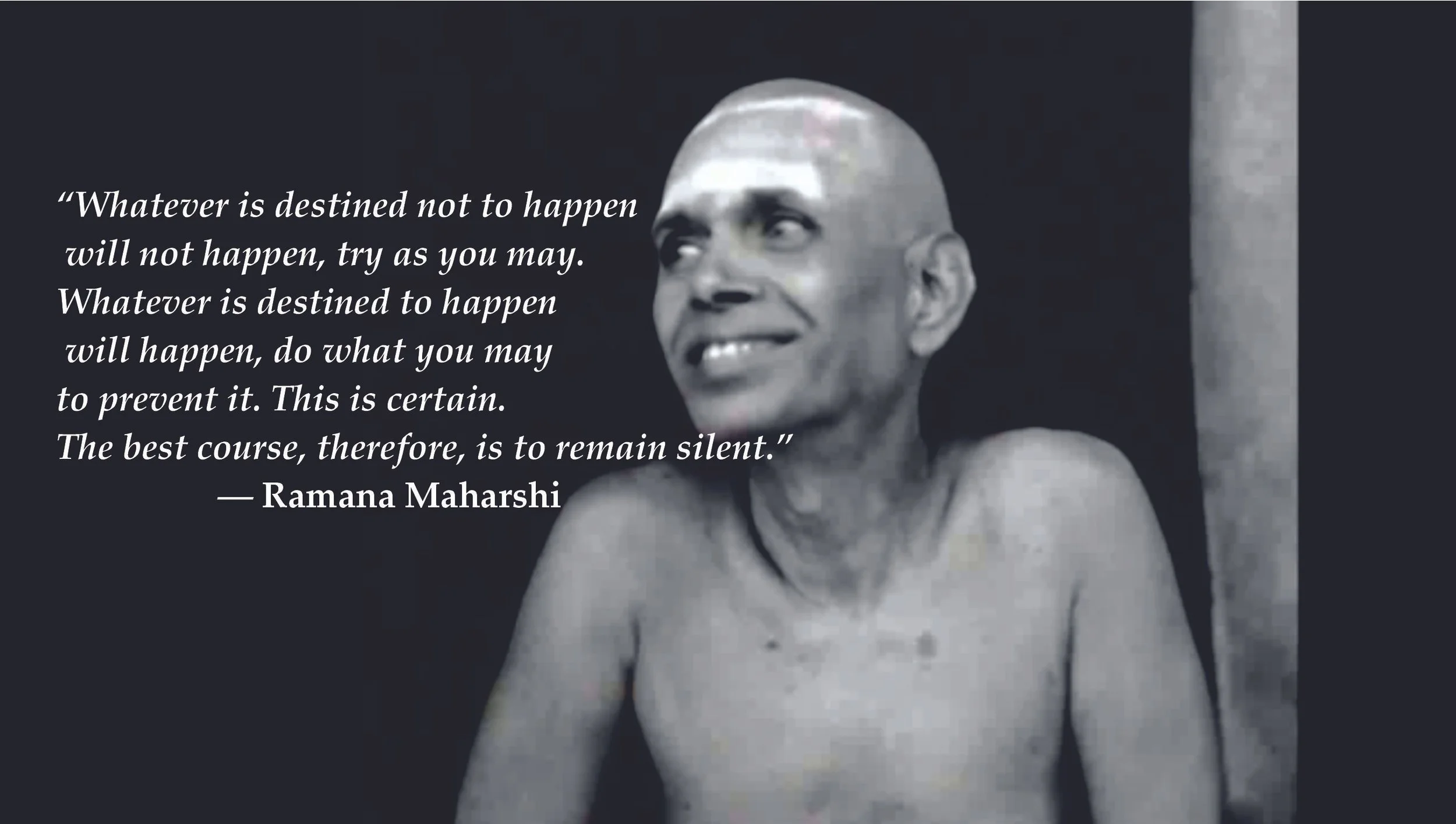
The Role of The Breath
Sometimes, no matter how much we try to remain calm, emotions overwhelm us. In these situations, the breath can often play a pivotal role in bringing us back to an equanimous state. Deep abdominal breathing will activate the parasympathetic nervous system (through the vagus nerve) bringing down the stress hormonal response. Such breathing is a great tool in bringing about calmness. Not only does abdominal breathing activate the vagus nerve, but it also balances the two influential nadis in the spinal column.
The flow of prana in these nadis controls the activities of the organism (not just the body, but the mental activity as well). The ida, which flows down in a spiral fashion) is the moon nadi. It cools the body and the mind. When over stimulated it leads to depressive and self-centred thoughts. When under stimulated it leads to dullness of mind and body (the Tamo guna). The pingala nadi is the sun nadi which spirals upwards around the spinal cord, brings activity to the body. When over-stimulated the activity of the body and mind becomes frenetic. When under-stimulated the activity becomes sluggish and slow.
The key to health (in body and mind), as related to the flow of prana in these nadis, is balance. When there is a balance in the flows, we become balanced in our lives. The corollary is true. When there is balance in our lives then flow of the nadis moves towards balance. The state of balance is the state of equanimity.
The flow of prana in the nadis is affected by the breath. Smooth, deep (but not excessively), slow abdominal breathing, breathing that draws air right into depth of the lungs, helps to balance the nadis and bring us into equanimity.
The yogic practice of nadi shodhana pranayama is a simple method of balancing the nadis through alternate nostril breathing. One version of nadi shodhana involves blocking the right nostril with the thumb and gently and slowly breathing in through the left. Block both nostrils and retain the breath for a few moments, then block the left nostril with the ring and little fingers and breathe out through the right. This is followed by breathing in through the right nostril while the left is blocked with the breath retained after inhalation for a short time. Finally breathe out through the left nostril whilst blocking the right nostril with the thumb. This cycle can be repeated three, nine or twenty-one times. It helps to create a calmness in the mind. From that calmness, equanimity can arise.
Equanimity is a Pivotal Spiritual Practice
Once Buddha set out to seek alms. He was approaching a village where there were a number of devotees of Buddha. At that time. some wicked persons confronted him on the way and abused Buddha in various ways. Buddha sat on a rock nearby without proceeding with his journey. He addressed his traducers: "Dear children, what is the pleasure you derive from abusing me?" Without giving the reasons, they continued abusing him in worse terms. Buddha sat down saying, "If abusing me gives you pleasure, enjoy it yourselves." Exhausted by their abuse, they were preparing to leave. At that time, Buddha told them, "I stayed here all the time because if I had gone to the village, my devotees there would not have spared you if you had indulged in all this abuse before them. It is to save you from this calamity that I had put up with all your abuse, given you a free rein and stayed here." "If we want to please others, we have to do many things and even spend a lot of money. I am happy that today without incurring any expense or taking any trouble I could give so much pleasure to all of you! What a fine day for me!" exclaimed Buddha. "You have derived joy from abusing me. So, I am the cause of your joy. I have given you satisfaction thereby. To bring comfort and happiness to people, many build choultries (guest houses), dig wells, or do other charitable acts. But without undertaking any of these acts, I have been able to give great satisfaction to these evil-minded men. This is a great achievement, indeed," observed Buddha. Sathya Sai Baba
This incident shows how being equanimous can be an active spiritual practice. Not only was Buddha centred in his own calmness, but He used this incident to foster positivity in the community.
A mind that is not moved by the ebbs and flows of life, but centred in the peacefulness of the Heart, has great power. Buddha’s words alone could not have swayed the abusers to change their ways. But the flow of serenity from the Heart of Buddha, brought about a change in the whole situation.
In the end it comes back to having great acceptance, not just on the outer, but inwardly.
The following story illustrates the essence of spirituality.
Divine Message given to Abheyananda
Swami Abheyananda of Tiruvanammalai (devotee of Ramana Maharshi) had a visitation from Sai. While being still in the astonishment and confused state, I heard a clear, distinct voice, which spoke in English thus:
“Do not get agitated. Don’t meditate. Simply watch the mind and it will disappear. Understand, the watcher is awareness, pure and unadulterated, abstract and absolute. Awareness is Self; this Self is Sat Chit Ananda. That thou art. This is the secondless peace, which you ardently seek. Be firm. Bliss is thyself. This secret is known only through one’s own intuition. The Stroke will reveal the secret. WATCH.”
When we learn to watch what arises within without reacting at all, we can begin to watch what arises outside with greater awareness.
Sathya Sai has manifested watches from time to time. With the gift of the watch, He always gives the following gift of wisdom.
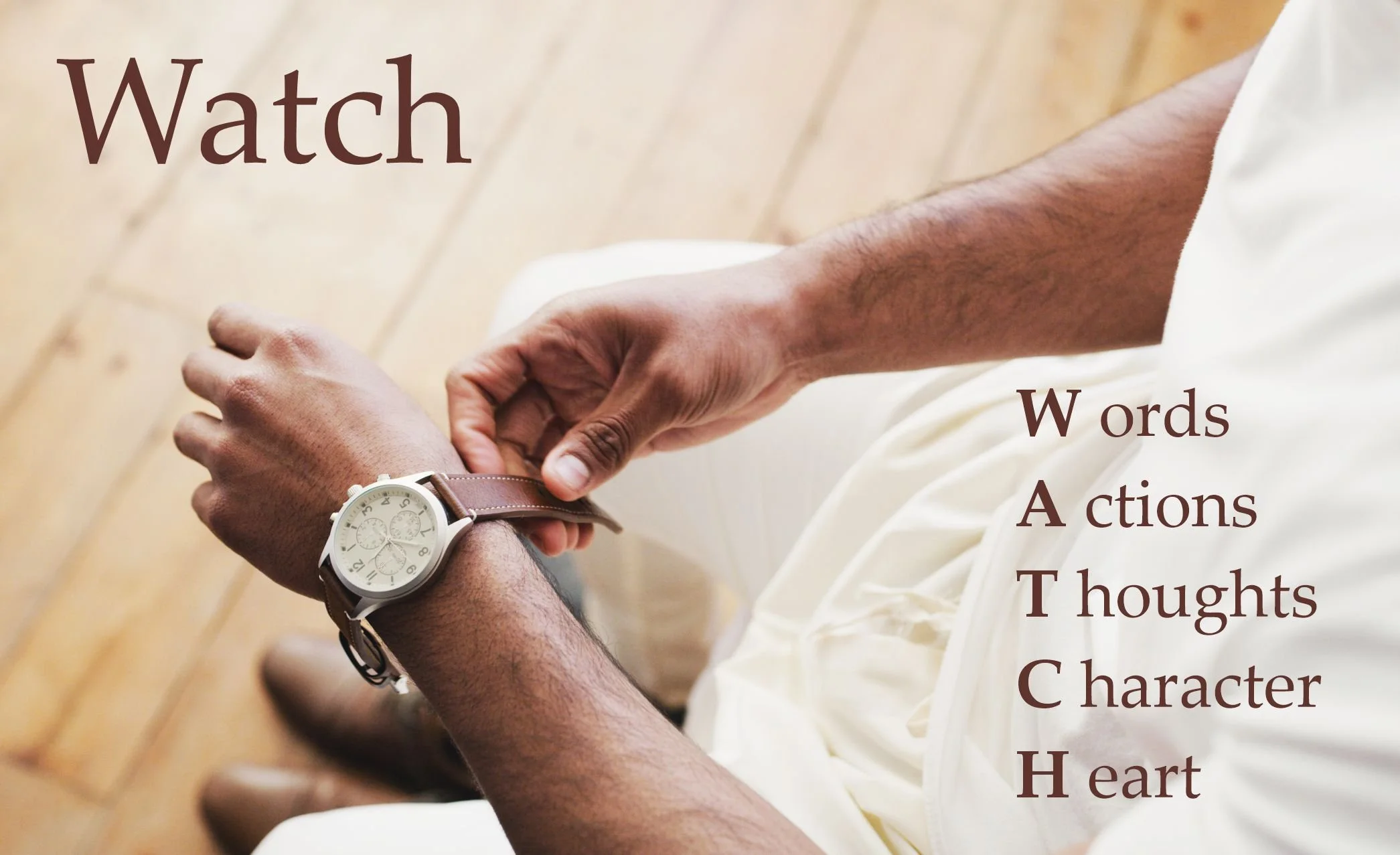
Watching from pure awareness allows us to experience the Oneness inside. That is the ultimate equanimity, for all is known to be ONE. - Satyavan
The Installation of the Saptarishis at Tapovan
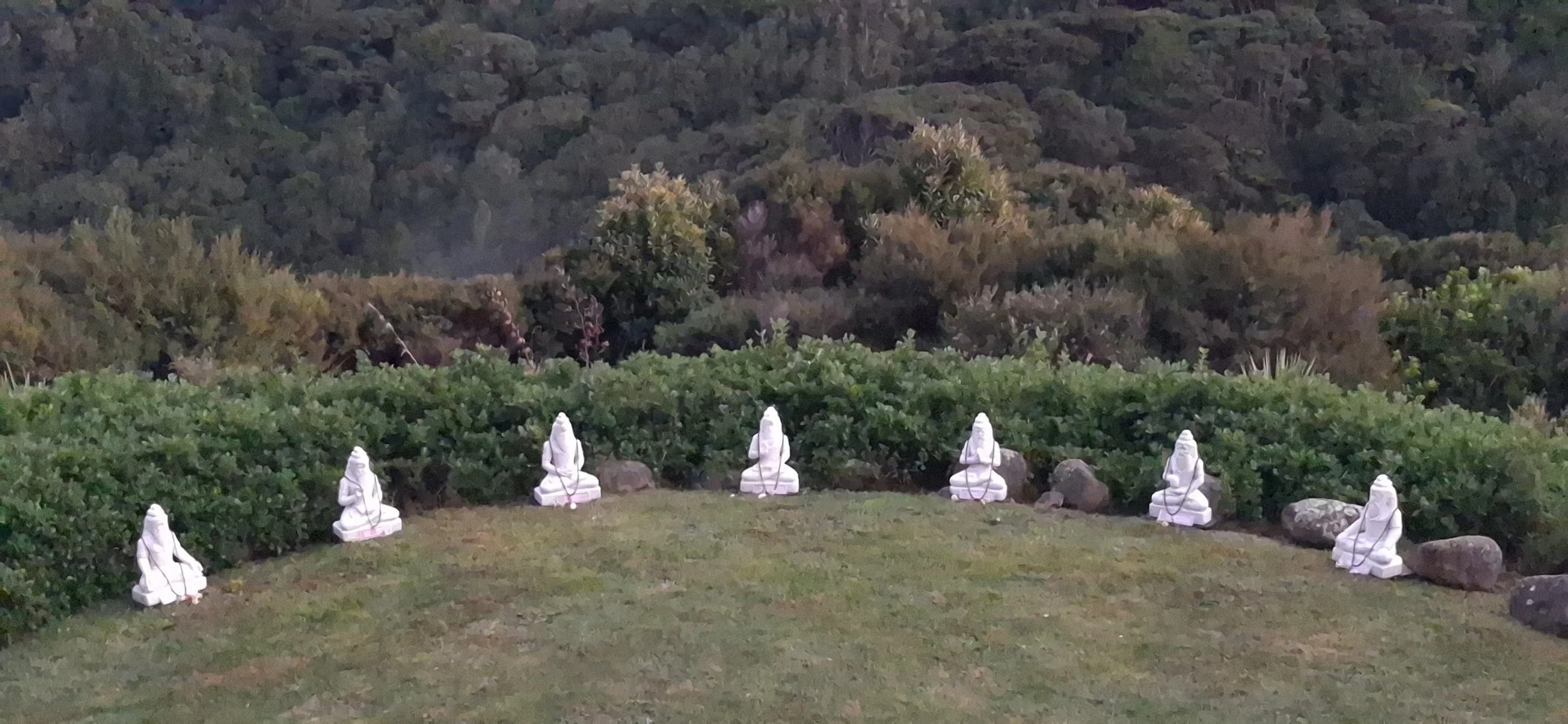
Sacred Earth has been established in the Grace of Sathya Sai and blessings of the Rishis (Sages) of the Himalayas. (The November 2021 newsletter contained information about the Saptarishis. I have reproduced that information so that those interested may study about the Rishis and their lives. This is attached to this newsletter)
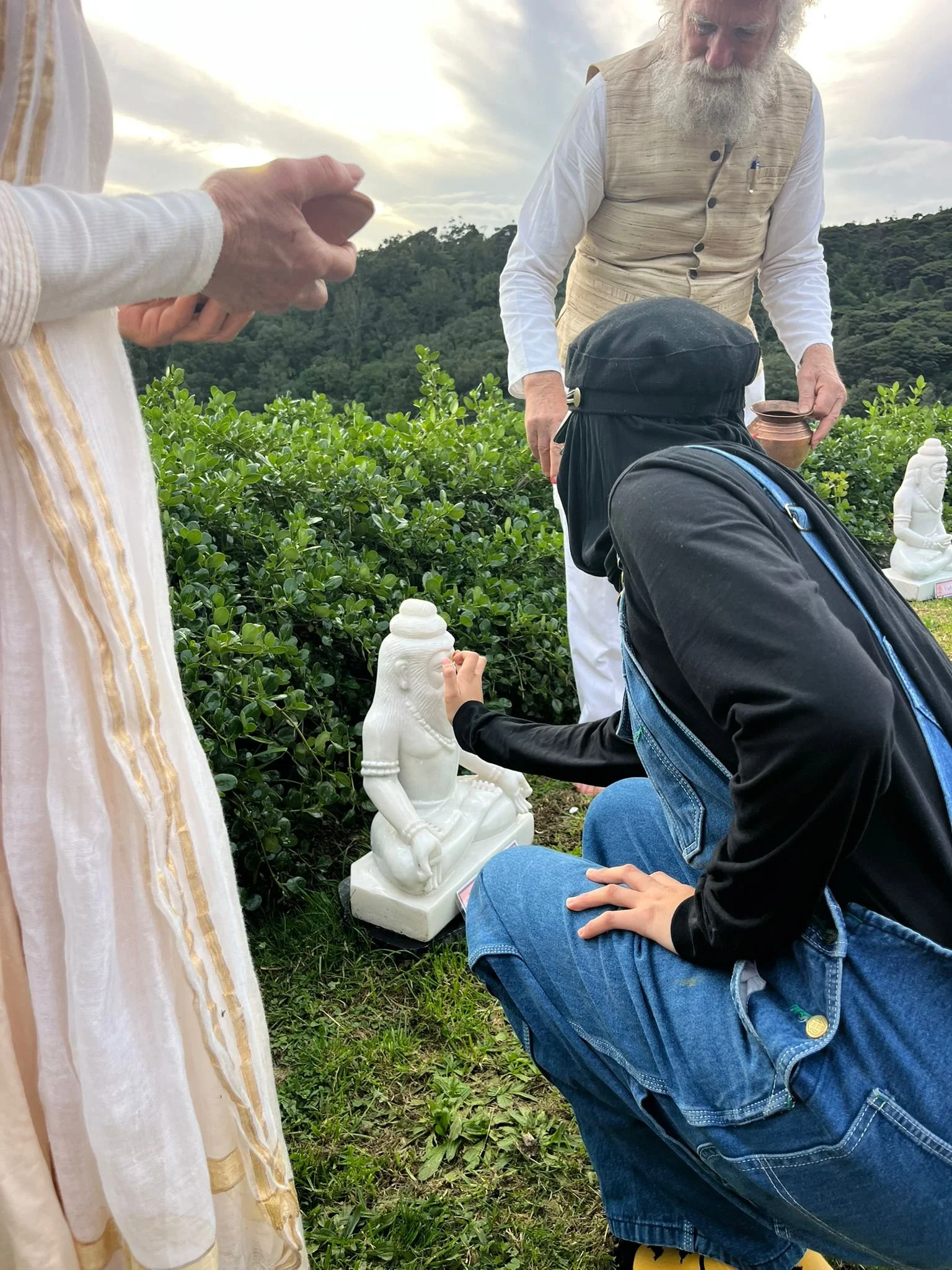
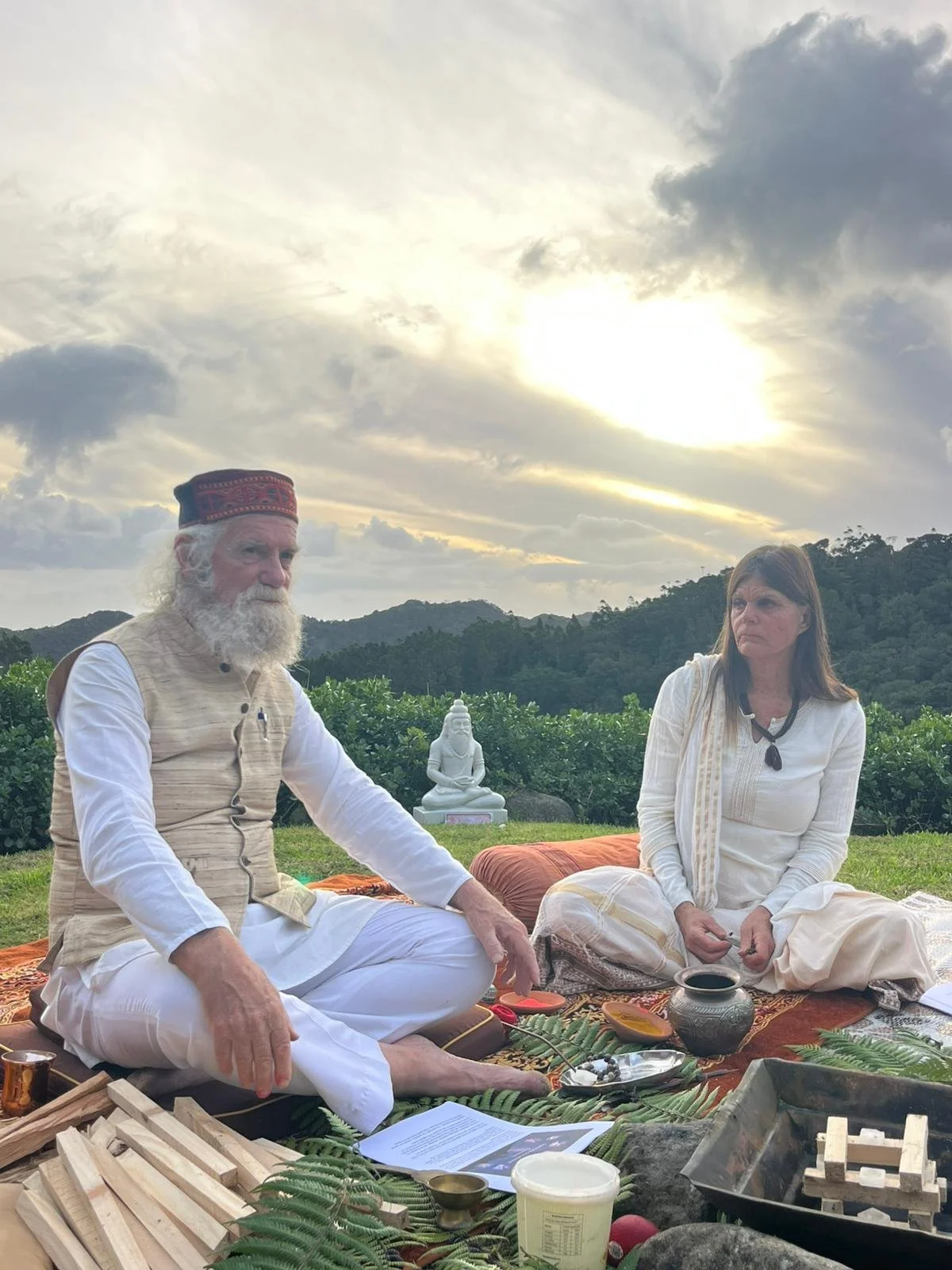
On Saturday 23rd May, a small group of us gathered in the Sanctuary at Tapovan and installed the murthys (statues) of the Saptarishis that have recently arrived from India. Alongside of this installation, we conducted a havan (fire ceremony) to honour the Saptarishis. One of the main practices in the ancient ashrams (spiritual communities) was the fire ceremonies (also called yagya – or sacrifice). Here are a couple of photos of that sacred evening.