PREMA JYOTHI - Newsletter of the Prema Trust and Sacred Earth Community – April 2026
Kia Ora Whanau
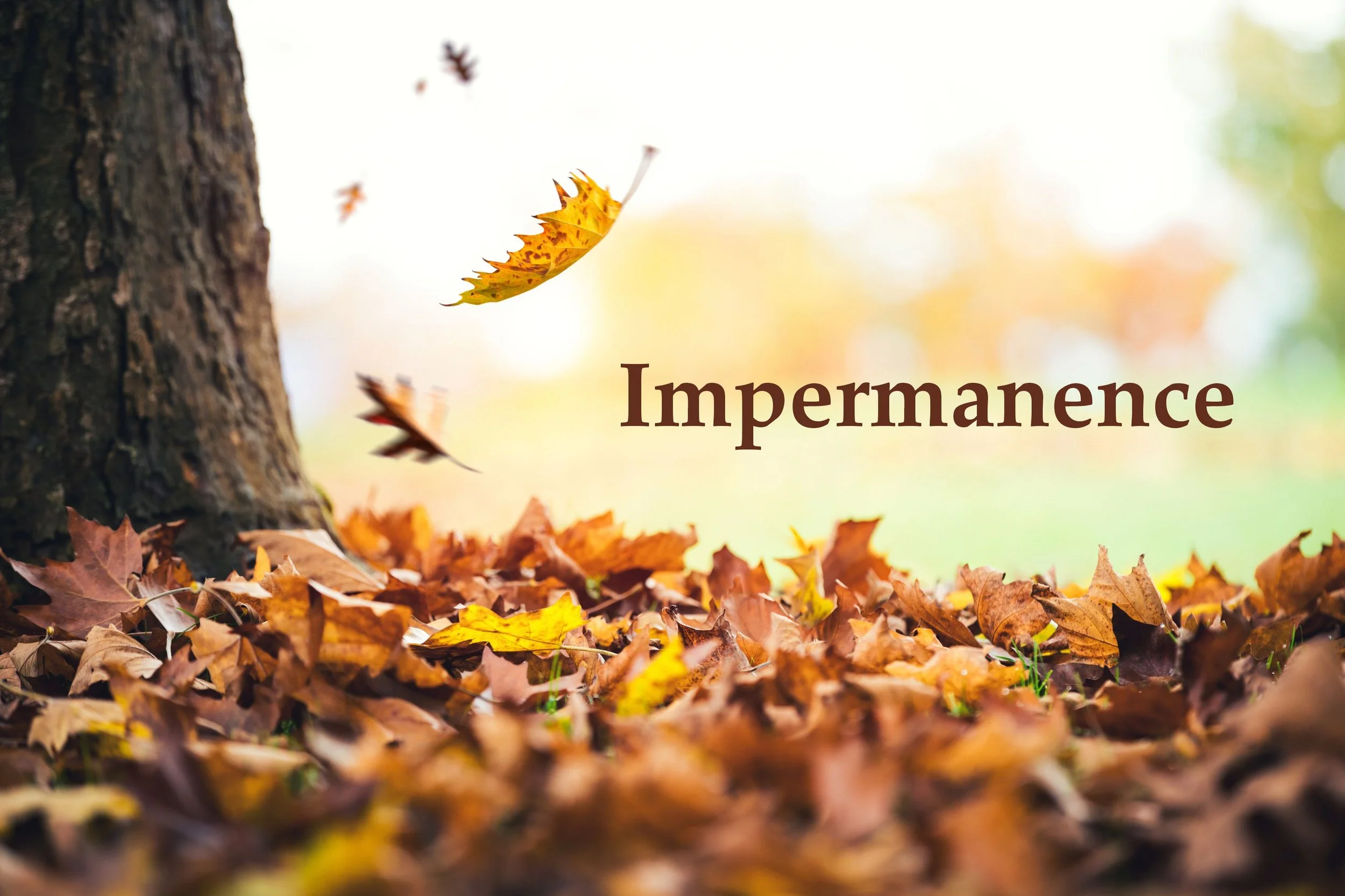
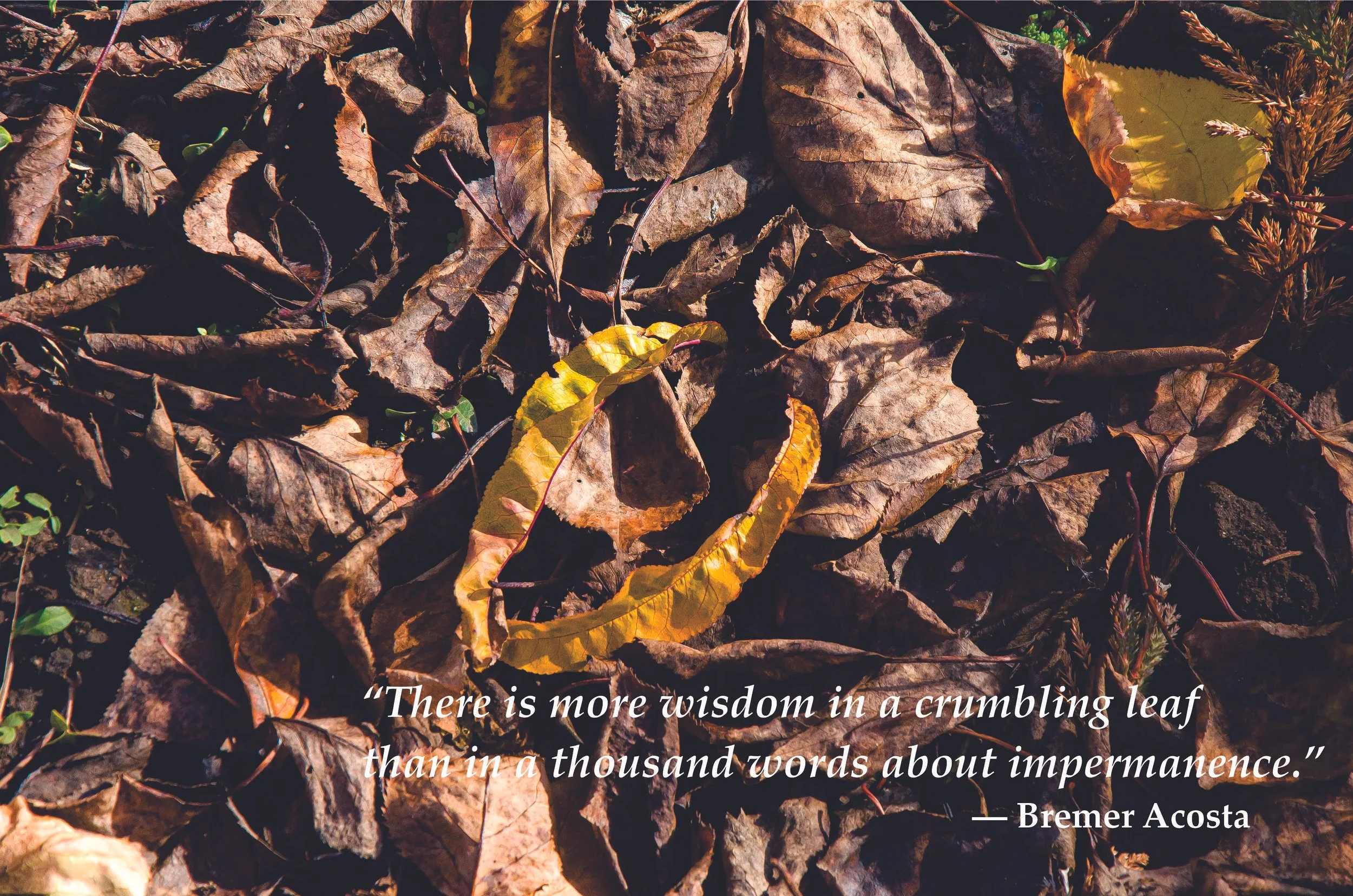
As human beings, we have an innate desire for stability in life and an innate aversion to instability. As such we cling to ideas, objects or other people and wish them to remain forever. But we all intuitively and practically know that this is not the nature of this changing creation. Like the picture above, we all end like fallen leaves, slowly disintegrating into the earth.
Our fascination with the impermanent Creation
Why do we cling to the idea of the permanence of the things we value in life? Also, why do we mourn when those impermanent things (be they objects or relationships) disappear? In this creation, the only constant is change. It is inevitable that the impermanence of this creation means that nothing lasts forever and death is the great leveller that we all face. In January I wrote about attachment and detachment. Essentially, attachment is the answer to the questions posed above. We attach ourselves to the outer and ignore the inner. We reach out to the impermanent (the external world) and ignore the permanent (the inner truth of who we are).
When we look back on our lives, we can clearly see that the one we thought we were is no more. We all age. Once we were a baby, unable to function without support and love. Then we grew into a child, mobile and playing. As we transformed into teenagers and then adults, our world changed and we became more self-sufficient (hopefully). Then, as we become elderly, we again require the support of others. No stage of life remains as it is. Change is a function of time.
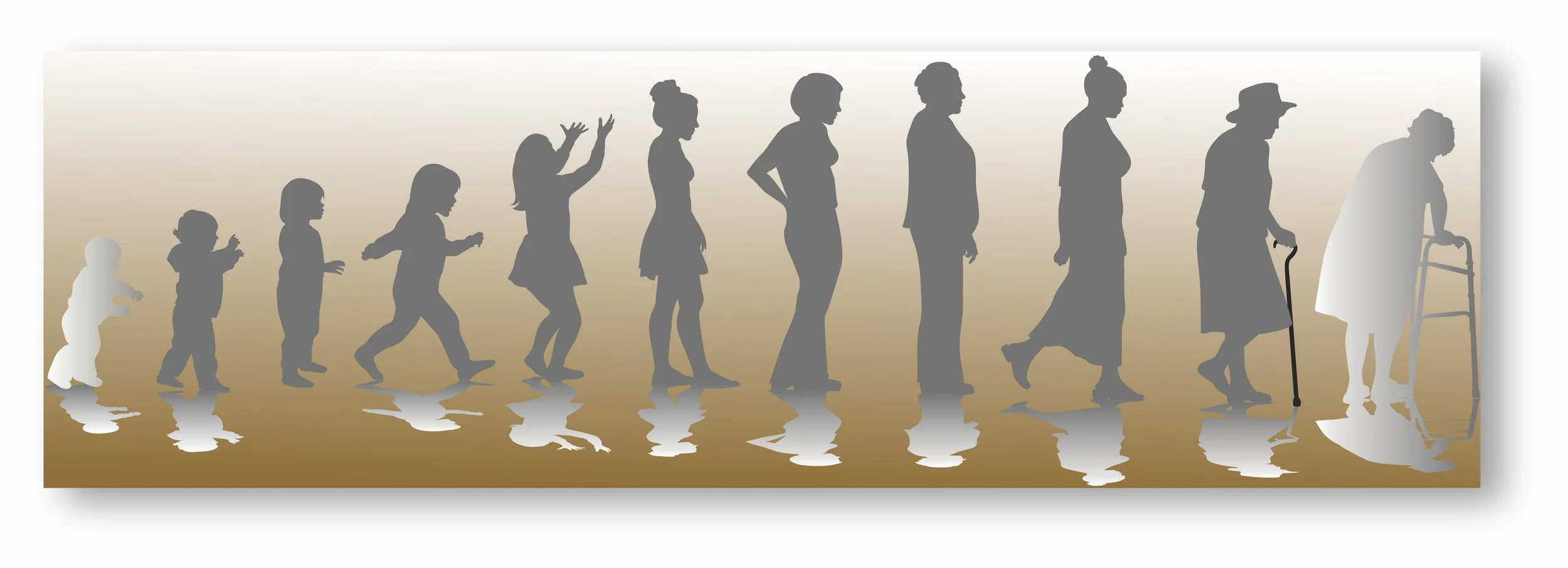
Life is an ever-changing progression from birth to death
Consciousness may be the Creator of Time
If change is a function of time, it is useful to contemplate the question ‘What is the aspect that time is a function of?’. Quantum physics and modern cosmology can only go so far as to understanding the origin of time. To explore this question, the outer evidence will only take us a small amount on the way to understanding. It may be that we have to go inwards to come to knowing who we are. Potentially, when we go inwards, we see that grappling with the questions of time (and, by extension the question of change) is pointless without coming to an inner realisation within consciousness itself. In other words, the answers that science and philosophy have sought for so long, are not to be found by studying the outer universe, but rather they may be resolved (or even dissolved) in the realisation of our innate and fundamental nature – the Self, Oneness or Pure Consciousness. That consciousness is the only part of this creation that has permanence.
The Permanence of Consciousness
The Universe is called prapancha - a manifestation of the Pancha Bhutas - the five basic elements, ether, air, fire, water and earth. As these elements are impermanent and subject to change, all human life is related to impermanent objects and pleasures. How is one to achieve that which is lasting within the framework of the impermanent? This should be done by breaking down the separation between the permanent and the impermanent and recognising the permanent in the impermanent - the One in the many, unity in diversity. - Sathya Sai
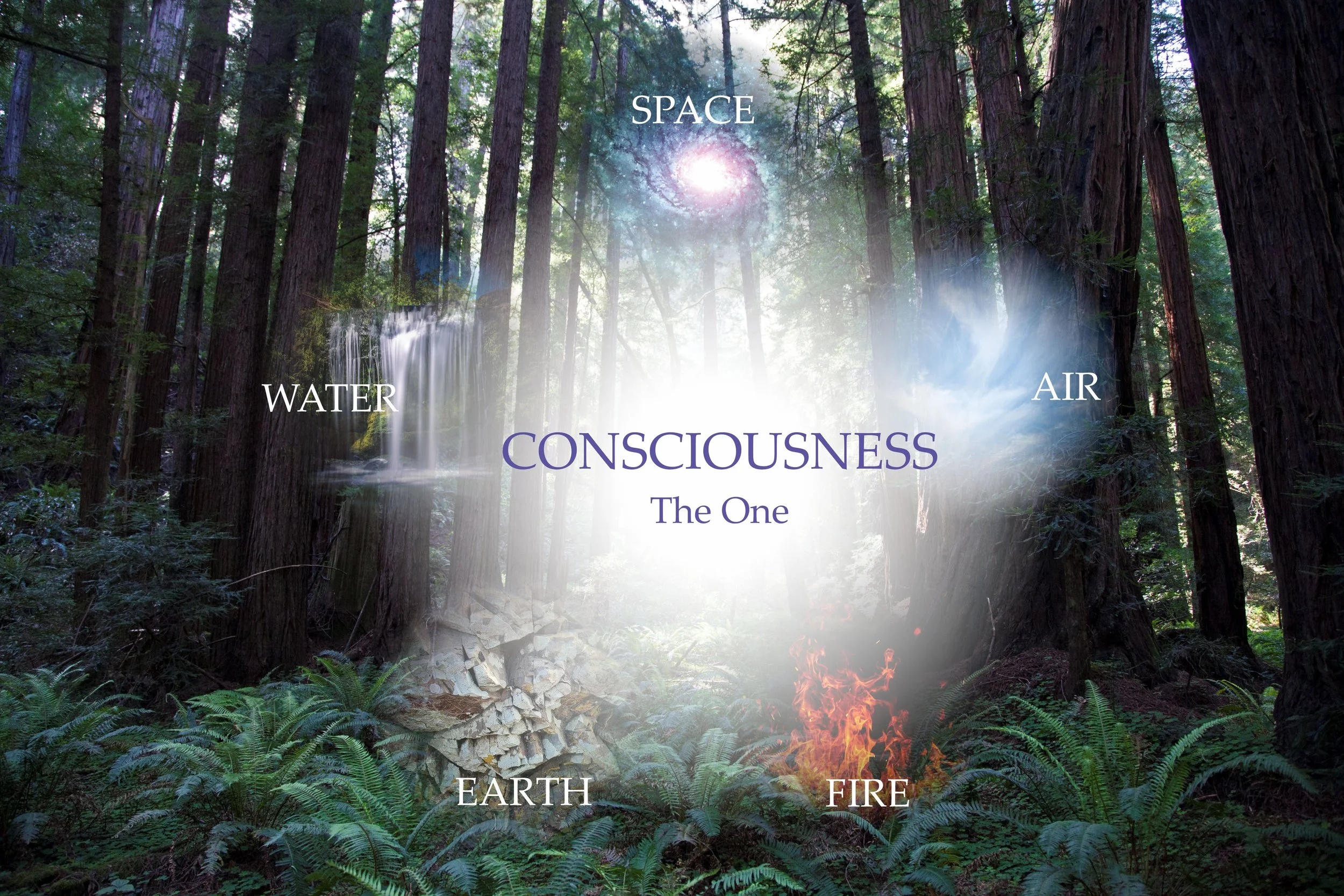
The five elements of nature are emanations of consciousness
The One in the many that Sai identifies is the consciousness that manifests as the five elements that make up creation. The concept of shunya (emptiness) as being the basis of creation is age old. In Te Ao Māori it is called Te Kore (the void). In Sanskrit is termed sunyata. The Greeks called it kāos. In the Bible the book of Genesis states “Now the earth was formless and empty, darkness was over the surface of the deep”. All of these concepts and ideas point to the basis of the universe as still and permanent. In my experience, the stillness is also vibrant with potential. Shakti the Mother energy of the cosmos connotes movement and movement connotes time. Time, as we have discussed, implies change – impermanence.
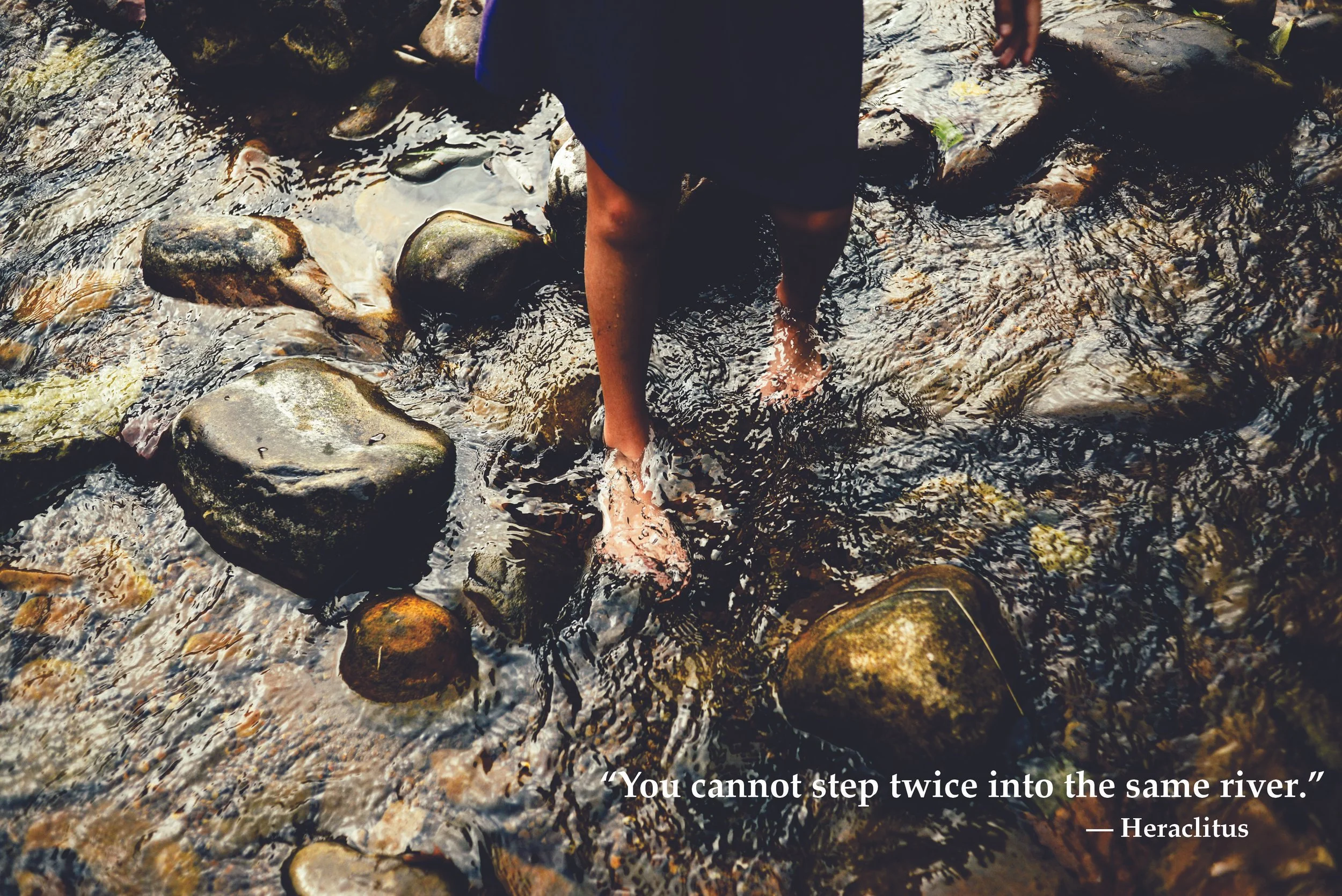
We cannot reverse impermanence. Time always moves forward and changes everything. What we can do is ‘flow with the changes’, surrendering to what is. This is not a passive resignation, but an active letting go.
As some of you may know, Savitri and I have been involved several projects that required a lot of energy input. For over 30 years I was the principal Wellpark College of Natural Therapies with Savitri administering. For over 18 years Savitri ran Kawai Purapura, a retreat centre and community on the North Shore, Auckland. These projects are no more. They consumed our lives in so many ways. The letting go process was not easy. It involved emotional and mental adjustments that were difficult at times. However, the understanding of the impermanence of material manifestations assisted us to make transition to a new life.
We all undergo similar transition points in our journey from birth to death. Birth is an incredible transition. Imagine, we are in the womb of our mothers. It is a warm, nurturing place for most foetuses. Suddenly we are being ejected from this caring space. We enter a different environment. We undertook this extraordinary journey out into a world of light, colour and sound. We were warm in the womb, now we have to be swaddled in blankets to maintain that warmth. We floated in the womb, now we are wrapped and constricted! We learn the first lesson of impermanence.
Consider death. We are here in this world and then, suddenly, we are taken from this world. Whatever we believe happens at death, it is still a very dramatic transition. I have observed that those who struggle with dying suffer. Those who surrender to the process often have a beautiful experience – a peaceful release. There is a lesson for us all in their example. The more we allow; the less impermanence becomes a process to be feared.
- Satyavan