PREMA JYOTHI - Newsletter of the Prema Trust and Sacred Earth Community – August 2026

Kia Ora Whanau,
Many of us struggle with our past. It seems to haunt us throughout our lives, especially when we look back and see the wrong we may have done in our lives. It is an existential question that nearly all of us have to face, knowing that someone may have been hurt by us in some way. This short newsletter explores this facet of human existence in light of spiritual principles that we may all adopt to overcome feelings of guilt.
How do we deal with Guilt?
Ask yourself , who is the one who feels guilty? What is guilt but a lack of self-love. Be aware that if you do something to hurt others, you are really hurting yourself. Be remorseful, that is healing. Guilt is the punishment you give to yourself, and it only furthers the wrong.
Allow yourself to become detached from the guilt by self-inquiry. Then you will see things in a different light. You will begin to understand the circumstances, the karmic influences that led to the situation. Then you will begin to forgive yourself. That is the antidote to guilt.
But, there is another phase. That is the learning phase. Here you begin to see yourself as changing, altering, not the one who performed the action that led to the guilt. Here we have the resolve to become more conscious in all that you do and so that these situations will have a different outcome.
It takes supreme courage to face yourself honestly. You must have the resolve of Vishwamitra (1), the calm steadfastness of Rama (2), and the pure love of Krishna (3). Combine these three and you will conquer the world, and yourself.This inner message from Sathya Sai Baba is useful in framing the answer to this question, which we can adapt to our specific circumstances.
1. Vishwamitra was a king who showed great resolve and persistence to become a Rishi
2. Rama was a prince who showed great resolve in rescuing his wife Sita from the demons
3. Krishna was and is the embodiment of Love
How do we develop patience?
Reading Sai’s statement, we can begin to understand how guilt eats at our own being. Although we have hurt someone or done something terribly wrong to someone else, we are the ones to suffer. People, and that includes all of us, from time to time, forget about consequences. One of the consequences of wrongdoing is that we are left with guilt, left with the feeling that we should not have done that. The guilt begins to eat away at our soul, our very being.
Sai talks about honesty being an essential prerequisite to dealing with and resolving guilt. Too often the ego tries to evade any responsibility for wrongdoing. We either lie to ourselves (or others) or we are self-deluded and think that we have not transgressed. Both course of action are founded on falsehood. Spiritual living in general requires of us stringent self-honesty. Dealing with tendencies that drive us in the direction of mental and emotional obstacles, requires a redoubling of efforts to examine ourselves, our motivation and our drives with a ruthlessness that is candid and revealing as to our own mental and physical behaviours.
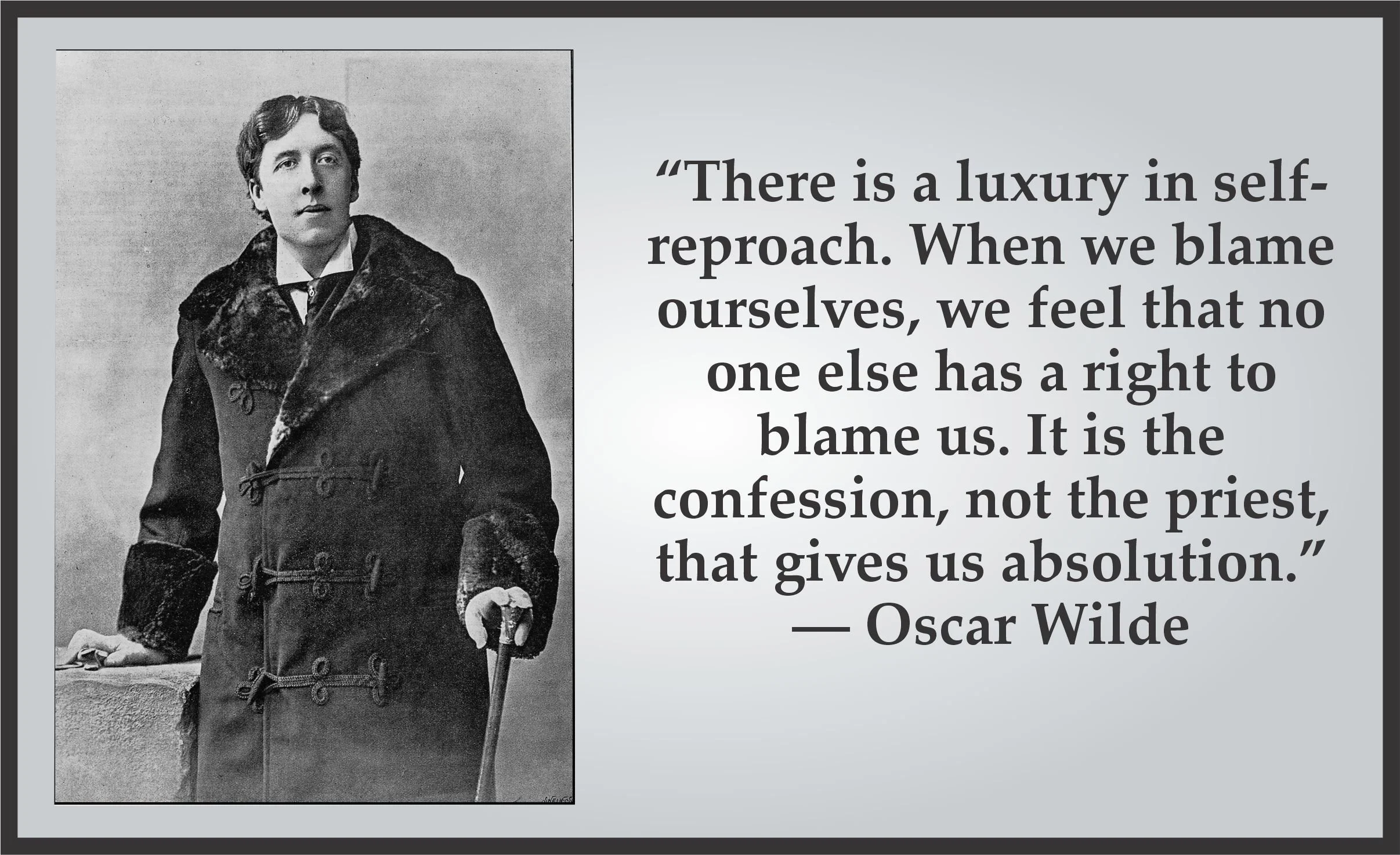
That being said, we can compound guilt through self-flagellation and punishment. As if the feeling of being guilty was not difficult enough, we enhance the a lack of self-worth through the diminishment of all that is noble and commendable in our character. We cover the Divinity that is our very nature in shame, which can also lead to resentment and a misunderstanding of how to start the pathway to redemption. We wallow in our guilt, for we see no way to get to a place where forgiveness is possible. As Oscar Wilde tells us, we feel somehow justified in our guilt if we reproach ourselves. No one is justified in judging or punishing us, for we judge and punish ourselves more than anyone could. This is a trap which is easy to fall into. How do we get out of this guilt trap? How do we come into a state of loving again?
I have definitely been in that place. It feels like a pit that cannot be climbed out of, or a weight upon the soul. My experience was one that shouldered most of my life, until I realised that there was redemption. I have known Sai for the last fifty years, but still a great sense of unworthiness plagued my life. Most of the time I was able to hide it, but it emerged in times of stress. This sense was one that I was born with – a hangover from previous lives. How did I finally overcome the shame? Through placing myself in the stream of grace, and looking inward to realise that I was worthy of that grace – accepting and forgiving myself.
Forgiveness a Divine Gift that liberates
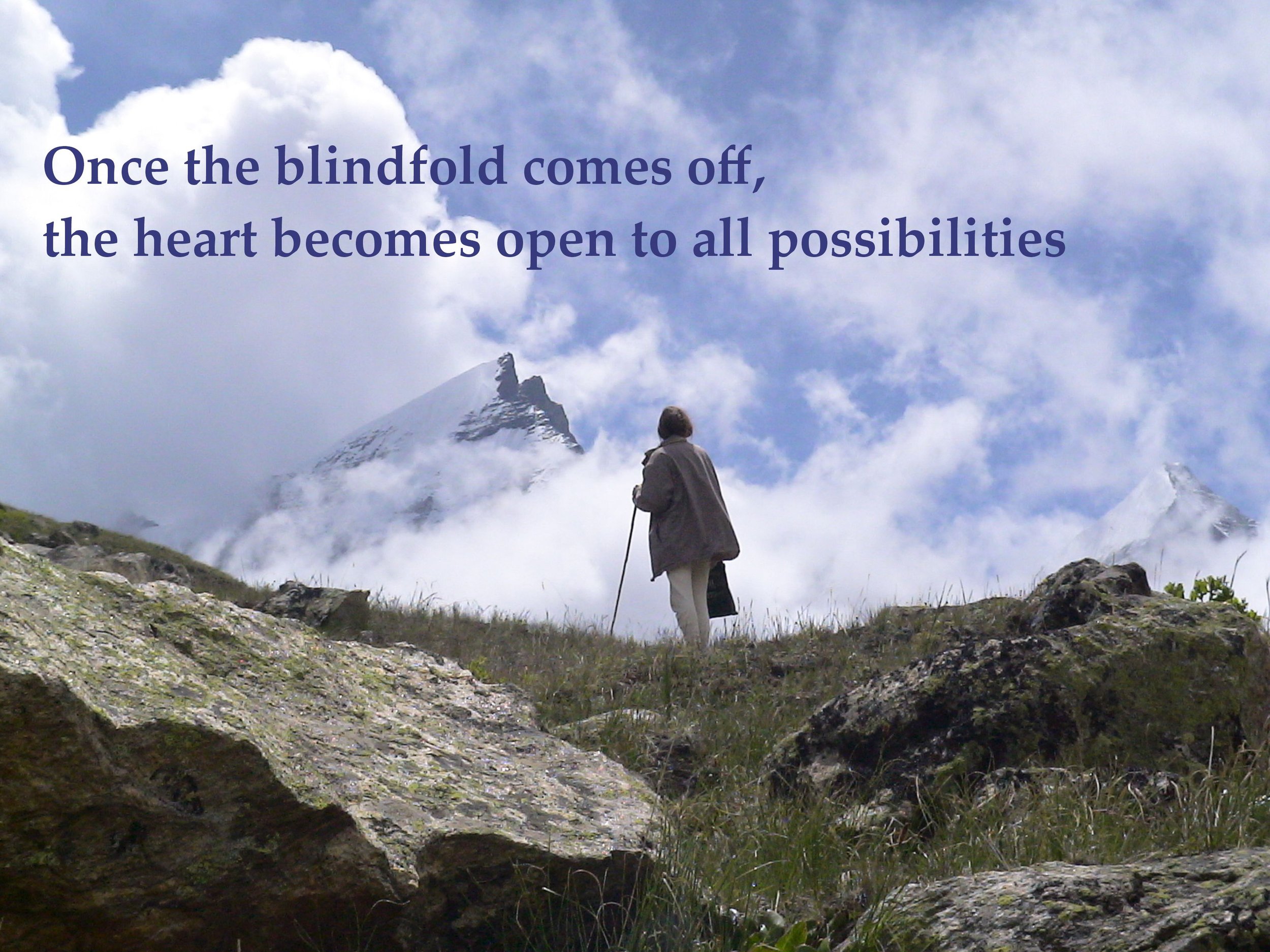
There is an inherent power in forgiveness that is often underestimated. Guilt often drives us to begin to blame others for our situation. However, forgiving ourselves is where we can start to practise forgiveness for others. Guilt arises and we are often swamped by it. When we begin to see ourselves as not the sum total of our guilt, but something more than our tendencies and our faults, we can start a process of forgiving ourselves. It is almost like we begin to take command of the situation and see ourselves in a different light. This is not an easy step. But it is a necessary step. Wayne Dwyer has stated that All forgiveness is self-forgiveness. When we begin to forgive ourselves, we automatically see situations in a different light. It is as if the guilt was blindfolding the heart. Once the blindfold comes off, the heart becomes open to all possibilities, including the one where the world is no longer a scary or threatening place, and life begins to feel more like a divine journey, rather than a series of difficulties to overcome.
If we can forgive ourselves we open ourselves to a new perspective on not only how we see ourselves and our life, but also shine a light on the beauty of our own heart and our own life.
Sathya Sai began addressed the crowd at the start of every discourse with the words “Premaswaruplara” – embodiments of divine love.
This is the core of His message to us. If we are ‘divine love’ then how can we demean ourselves? How can we walk around with a cloud of guilt that darkens the heart and prevents us from knowing our own true nature? Self-forgiveness is the antidote to guilt. Self-forgiveness gives birth to Love in the heart. Or rather it reveals the Love that we already are. With the heart open to love, all that we see, touch, do and say, will be redolent with that Love. Our lives will be transformed into paeans of Love that will radiate from the heart, transforming not only our reality, but the reality of those around us.
Guilt hides the truth of our very own nature. If we shine a light upon the guilt we conceal away in our own hearts, we begin to understand what we are doing to ourselves and we can, as Desmond Tutu (the great South African clergyman and statesman) we can also begin the process of maturing spiritually and living happier, healthier lives. - Satyavan