
PREMA JYOTHI - Newsletter of the Prema Trust and Sacred Earth Community – January 2026
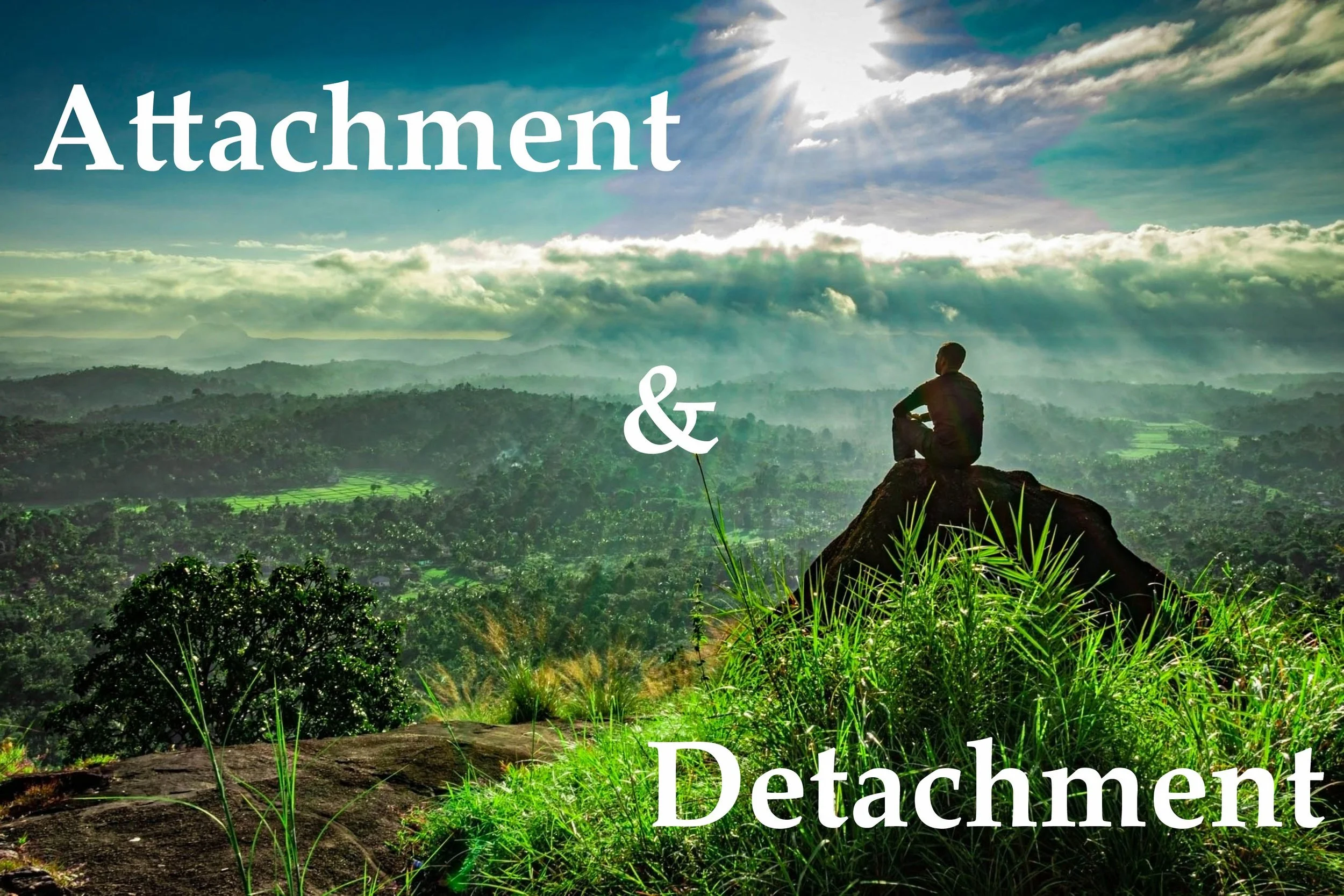
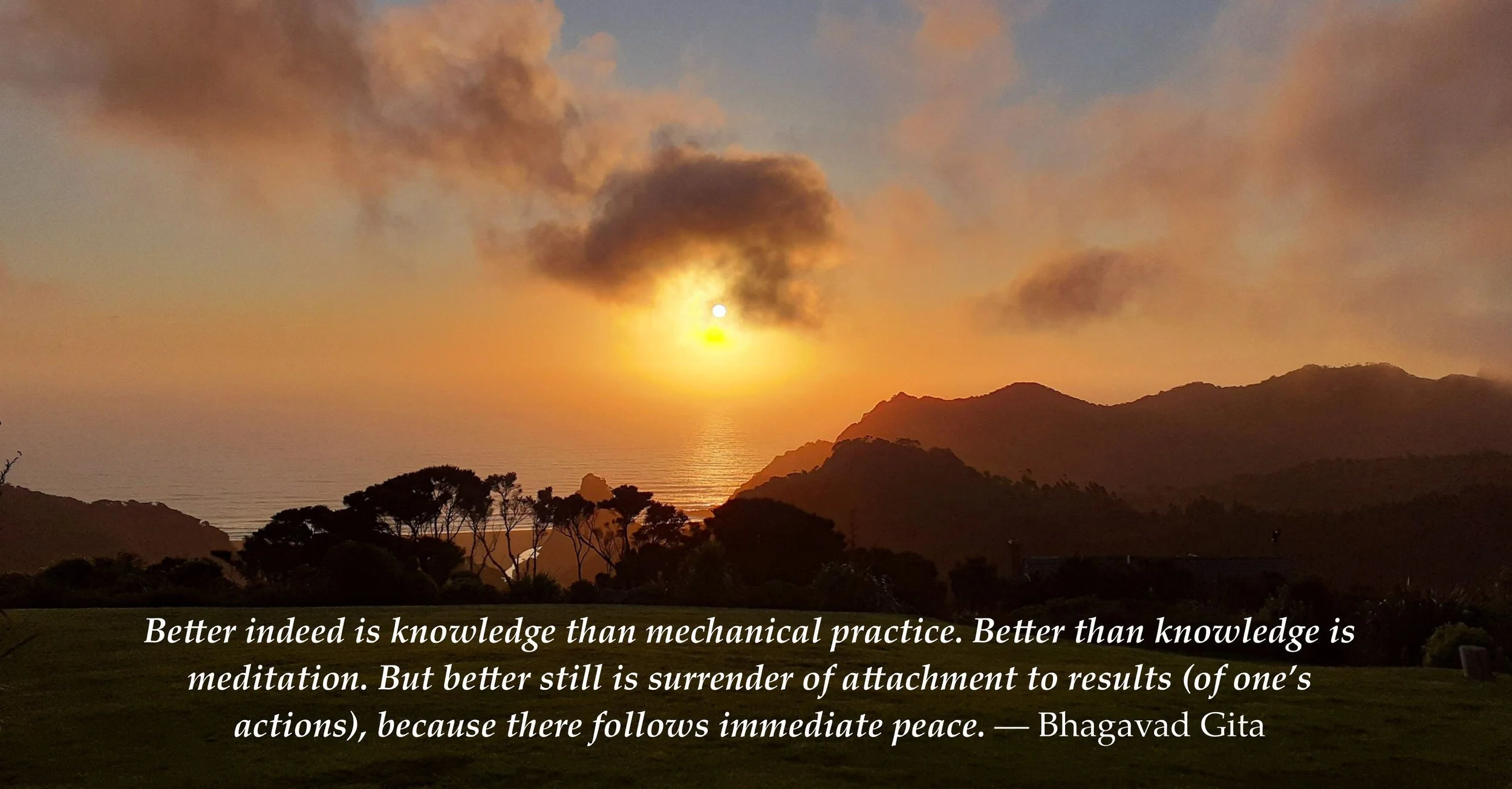
Renunciation or detachment (vairagya), of course, does not mean the giving up of hearth and home, or of high estate and even kingdoms. It is the understanding of the divinity immanent in everything, the fading away of all the distinct names and forms, the bliss of experiencing in everything and every place the Divine, which is its reality. - Sathya Sai Baba
Kia Ora Koutou. Wishing you all a very Happy New Year. When the new year dawns, it is common for people make resolutions, such as giving up some habit or common behaviour. We often see this as a form of detachment and, on the surface, this seems correct. Sai urges us to go much deeper than this, and to begin to recognise the unity within all this diversity, to see the divine presence in all. When this occurs, we are less inclined to become attached to any particular aspect of this creation, as all the creation sings the same song of Divine Unity.
The Nature of Attachment
Modern psychological theory talks of stages of attachment, from a newborn’s attachment to the mother to attachment to many other relationships. Known as attachment theory, it posits attachment as being emotional bonds between growing children and those closest to them. This is all very normal and natural and part of the human life cycle. The mother’s attachment to children is strong and is seen in all the mammalian species. Attachment to the father seems to come later and is reinforced by how much interaction children have with their fathers. The circle of attachment then widens to include family members, friends and others. As children develop, they also become attached to the environment and other aspects of their lives such as possessions. All this is natural and normal and not conflicting with spiritual growth. How does attachment become an obstacle to such growth?
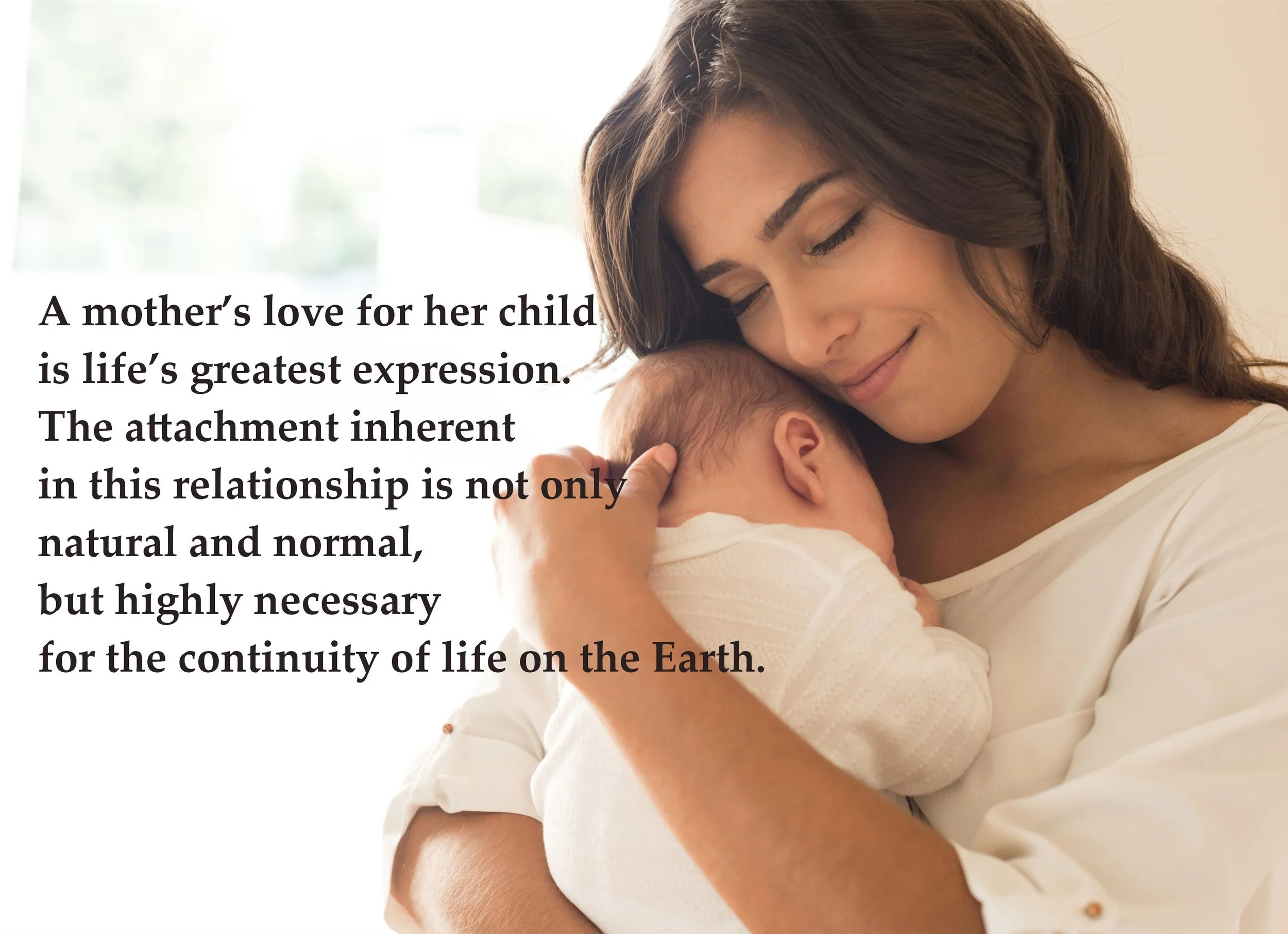
This question is a pertinent one and is perhaps a more difficult issue to understand, let alone solve. Attachment is an important aspect of life. It offers stability and surety to us as we develop. But there comes a time when attachment develops into dependence. Nothing in this world lasts forever, yet we often behave as if our familiar world, people, things, environment, way of life, etc. should last forever. It is a fact that our current situation is really a temporary phenomenon, one that is often forgotten the further we traverse the journey of life. We somehow cling to the idea that nothing must change in order for us to remain happy. When viewed rationally, this is an absurd notion. Everything in this creation is subject to change, often dramatic and violent, but can be also subtle and mysterious. It is as if we expect the river of life to completely stop so that we can bathe in its tranquil waters forever.
It is this attachment to life remaining as it is in the present that often leads to a ‘possessive ownership’ of our current situation. The ultimate illusion is that we are going to remain as we are forever, no death, no loss, all as it is in the now.
Attachment in the modern world
These attachments seem to be exacerbated by the role of social media, advertising, movies, TV, etc. in the modern environment. We become under the spell of the illusion of permanence. We do everything we can to remain young and beautiful, healthy and ‘happy’. We deny the role of time and the changes that time brings to our existence. We cannot believe that we, or the ones we love will never die, yet death is the only real certainty in this life! We ‘bet’ on the share market with the expectation that we will make money. We glamorise the movie stars, pop stars and all the other stars in our lives, until we even become attached to this glamour, this illusion.
When the impermanence of things occurs, such as floods, cyclones, and other natural ‘disasters’ becomes evident, we look for someone to blame for our woes. This planet has never been predictable and will continue to have shifts in circumstance. These shifts create fear and anxiety, so we insure ourselves to the hilt against such happenings, only to find that the insurance company is reluctant to pay us what we think we are owed!
Attachment seems to rule our lives and influence our behaviour to an incredible degree. For those of us attempting to live a life free of such influence, how can we make a shift from attachment to detachment?
Stabilising oneself in detachment is itself the highest austerity (tapas), the most exacting vow. One has to be ever alert in that austerity and strive again and again. Like a child endeavouring to walk, you might toddle a few steps, falter, and fall, but like the child, you must lift yourself up with a smile and start again. Peace is essential for such persistence. Failures are not boulders that block your way, remember, they are stepping stones to victory. - Sathya Sai Baba
Ceiling on Desires as a means to free oneself from attachment
We cannot simply make ourselves free from the claws of the bonds that we have created for ourselves (perhaps over lifetimes). The process is neither a simple resolution (such as those made every new year), nor a single determination to become free. It is rather a gradual process of change, which begins with simple steps, such as limiting a few of our desires gradually and effectively in a well thought out series of the reduction of habits (the ones that bind us) or behaviours that lead to greater attachment.
For example, we may decide to have a day in the week where we do not access our social media account. We may choose to reduce the amount of food we consume for one meal in the day. We may choose to wear second-hand clothing, rather than buying new clothing on a regular basis. There are multiple ways in which we can reduce our desires, both saving us money and simplifying our lives.
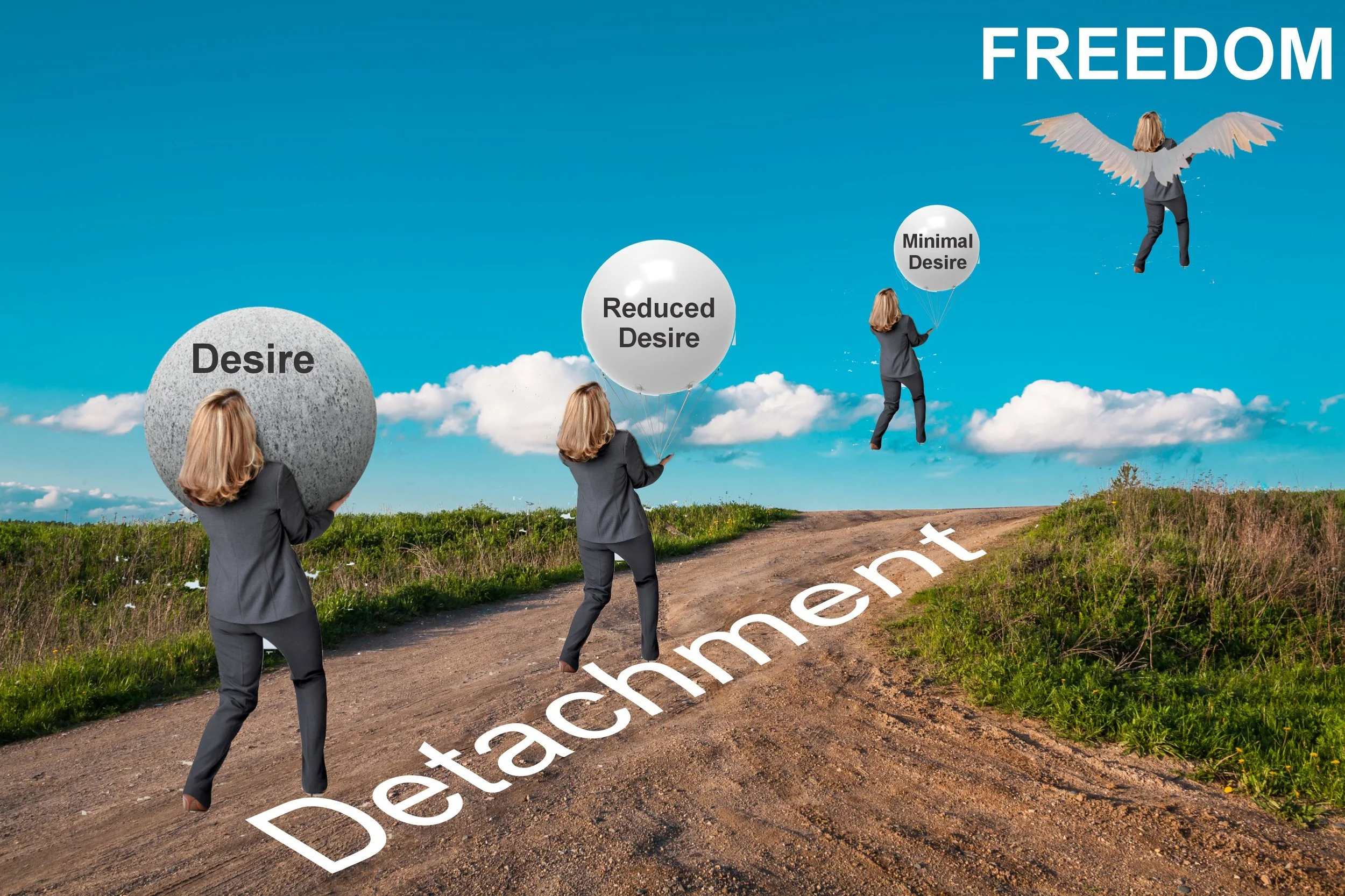
The Road to Detachment. As we progress in reducing desire our life becomes lighter, and we realise that the burden that desire places on us makes it very difficult to live freely.
Through this process we find ourselves feeling happier, less stressed, our lives less complicated and our time for reflection increasing. With that reflection comes discrimination, which is an essential factor in reducing attachment.
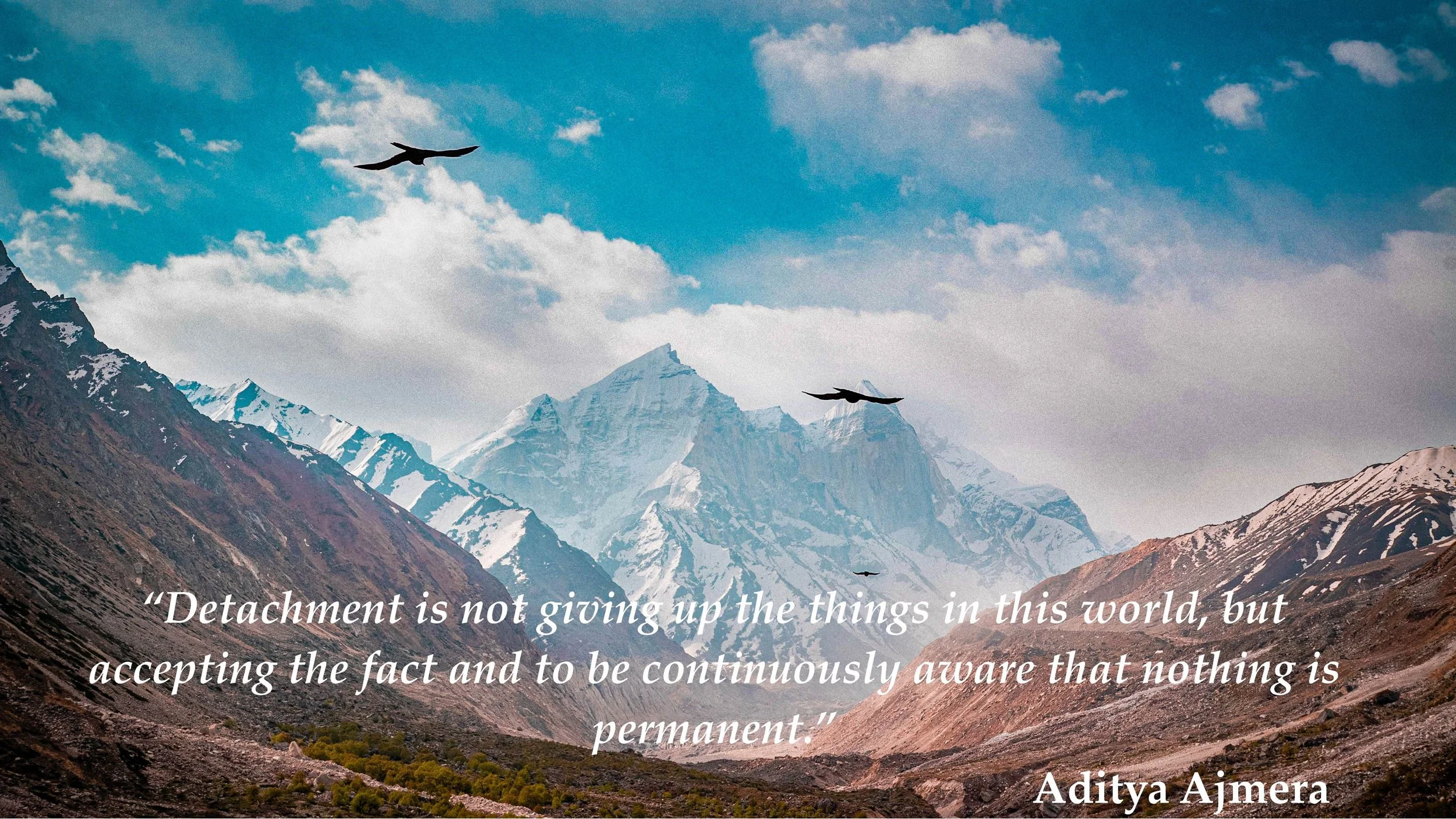
Detachment is Not the Opposite of Attachment – it is the opening of the Heart to the One We really are
Strangely, we are not dealing in two opposing concepts when we think of attachment and detachment. We are not in a struggle to remove desire, nor are we attempting to be pure and good. This idea of opposites has been propagated by organised religion for countless millennia. Often, when we oppose something, it only gets stronger. If we try to be ‘good’, we often fall into the mistake of enhancing spiritual pride, a feeling of being morally ‘pure’.
What if we were to simply begin to recognise our attachments? What if we become the observer of the desiring thoughts and actions that arise from them? Within that recognition arises awareness. From the awareness detachment can occur spontaneously. Detachment is not a struggle against desire; it is simply letting go and observing the desiring thought. So often we have been told we are ‘sinners’ for having desire. Desire is what birthed the creation. It is neither good nor bad. However, it does have binding power, which can keep us in ignorance of our own nature. But only if we follow its dictates.
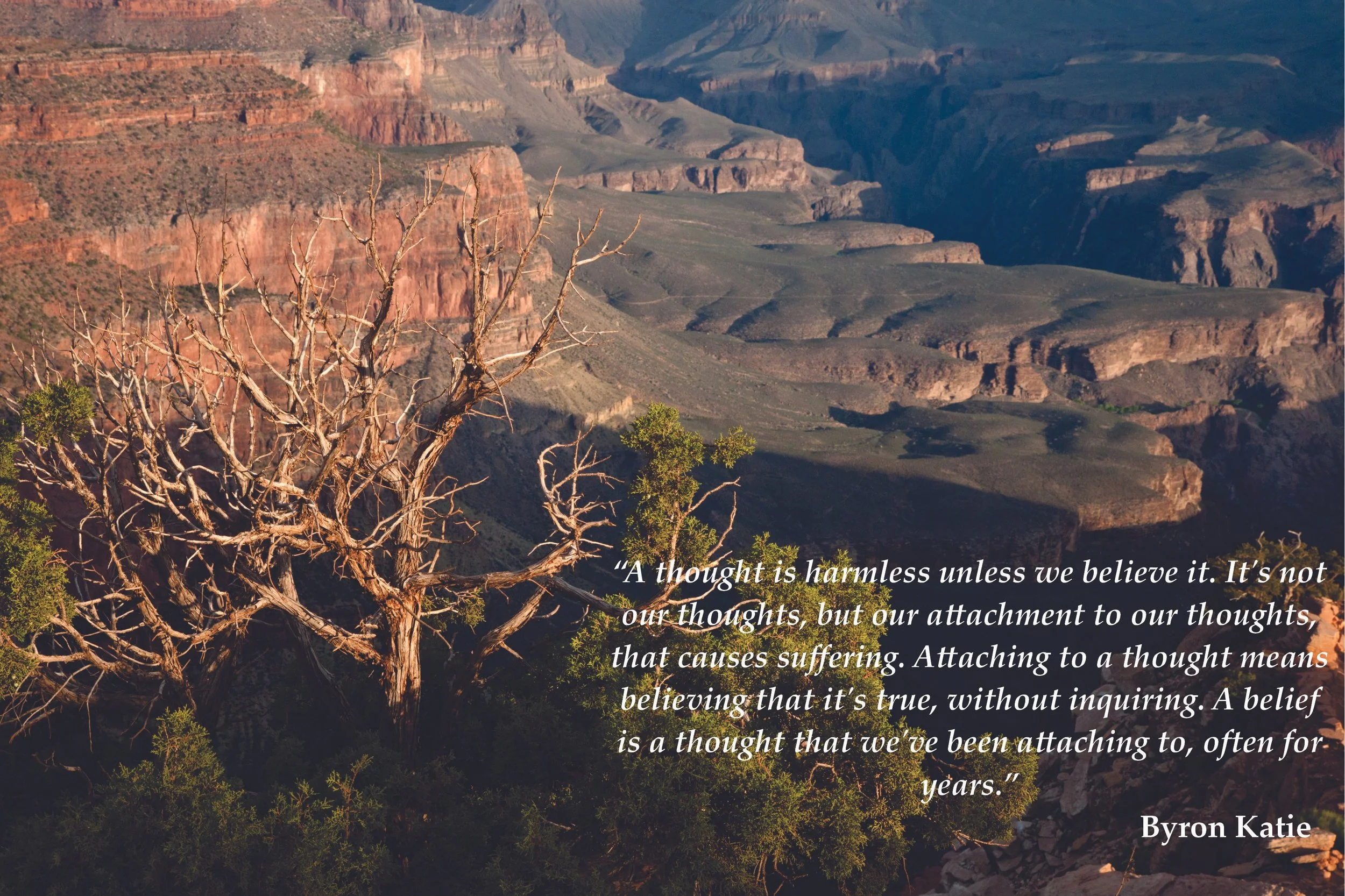
When desire arises, if we simply follow that impulse, rather than observing it and realising the consequences of following such thoughts, we find that it binds us into an attachment state. Some desire is necessary, otherwise all life on this planet would cease to exist. It is in-built within nature. What happens when such desire becomes excessive? It turns to greed; it creates fear and can lead to violence. Desire (and the fear of losing or not obtaining the object of our desire) often generates violence and hatred. World literature, from the Indian epics, the Biblical scriptures, to the plays of Shakespeare and other well-known authors, is littered with examples of the consequences of excessive or inappropriate desire and how the mind becomes attached to achieving our desires.
If we could develop the discrimination to recognise when inappropriate desires that could lead to disastrous consequences arise, we would be less likely to become trapped in the cycle of attachment and despair (when we lose the object of our attachment).
The key is to begin to explore who we really are
This process is not a denial of the place we find ourselves in, rather an expansion of awareness to begin to experience that we are more than the one we thought ourselves to be (the amalgam of the physical and mental). Through self-inquiry, through the practice of meditation and yoga, through rigorous examination of our beliefs and understandings, we can begin to open to the Oneness.
That Oneness is an inclusive ‘place’ where we know ourselves to be whole and complete and understand that we are simply not just the conglomeration of our thoughts or actions, but part of a greater whole. Our conception of ourselves changes. Our experience of ourselves changes. That which we believed ourselves to be changes to become inclusive, where the ‘whole’ somehow absorbs the ‘part’. The beingness expands beyond mind and we experience ourselves as being inclusive of, and a part of, everything. Words are really not adequate to depict such a sense of Oneness. Many of us have experienced this place. Often, what draws us back into separateness is attachment. Except that now we can know that there is a something beyond – some sense of wholeness that endures, if even just in memory.
With this progression, detachment begins to arise naturally in our lives, and we find that the attraction of worldly things begins to diminish. It may be gradual (possibly over lifetimes), or it may occur in an instant, there is no rule, no prescribed process. This beingness is really the birthright of all of us and, inevitably, we will seek to claim it as such sooner or later.
COMING IN 2026

Call of the Heart
WORKSHOP SERIES
iN 2026, We are offering a series of day events that draw upon the ancient wisdom of the Himalayan Yoga Tradition to allow us to reorient our lives towards the freedom of the inner way. In these events we will explore the inner makeup of humans and how we can use that exploration to transform our lives and free ourselves from the tyranny of the outer, creating inner mastery and freedom.
The first workshop is at the end of February