PREMA JYOTHI - Newsletter of the Prema Trust and Sacred Earth Community – February 2026
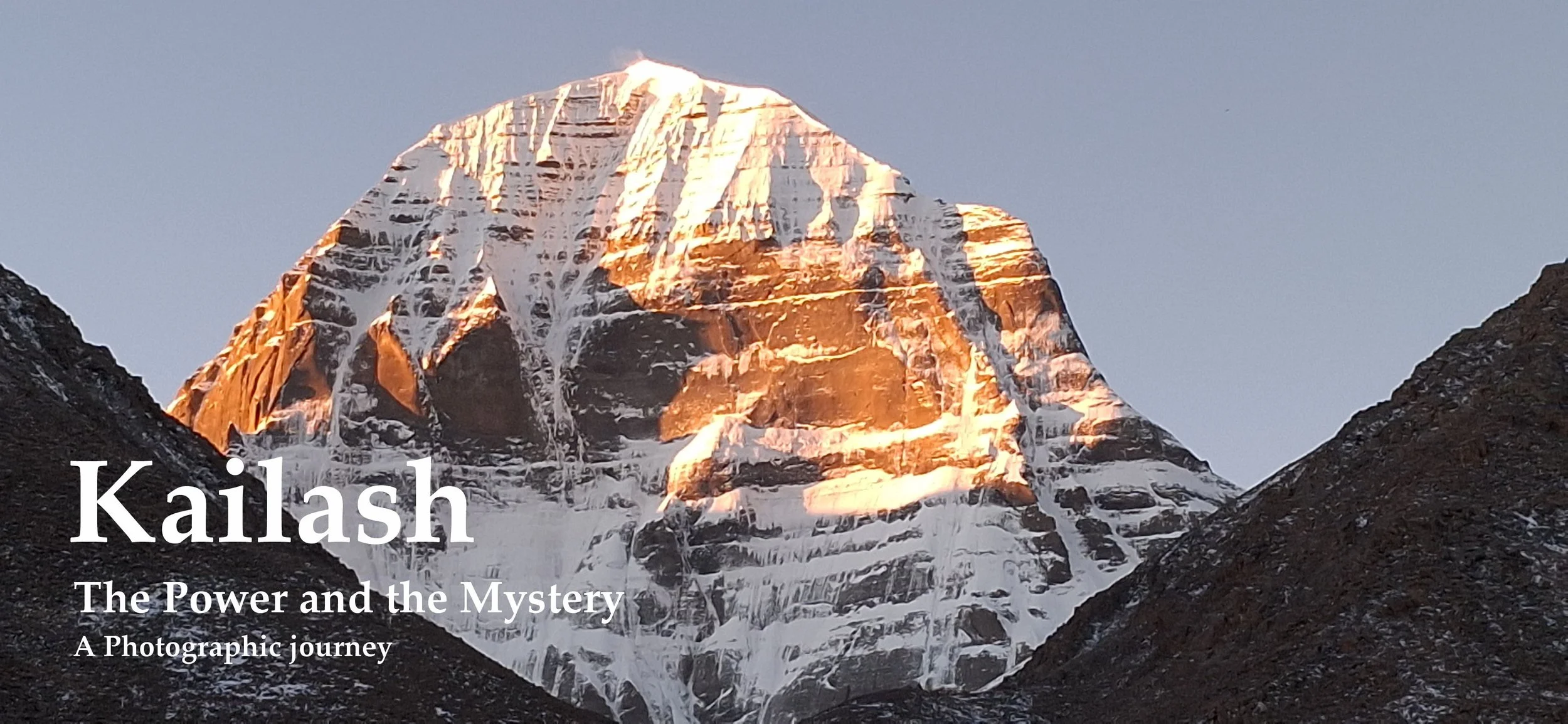
Kia Ora Whanau. This February we would like to share with you some photographs and descriptions of our recent pilgrimage to Mount Kailash in Tibet. Mount Kailash – the centre of the world
In ancient Earth, Kailasa was born, possibly out of volcanic activity underground. This was prior to the formation of the Himalayas, which occurred through the clash of two tectonic plates. It is said that in those times dharma (conscious living in accord with the universal order) was born. Kailasa is mentioned in the Vedas, although it is called Mount Meru in those hymns. Kailash or Kailasa is mentioned in other ancient Indian texts, such as the Upanishads (philosophical writings) and Puranas (ancient stories). It is known as the abode of Shiva (pure consciousness) for Hindus and Vedantins.
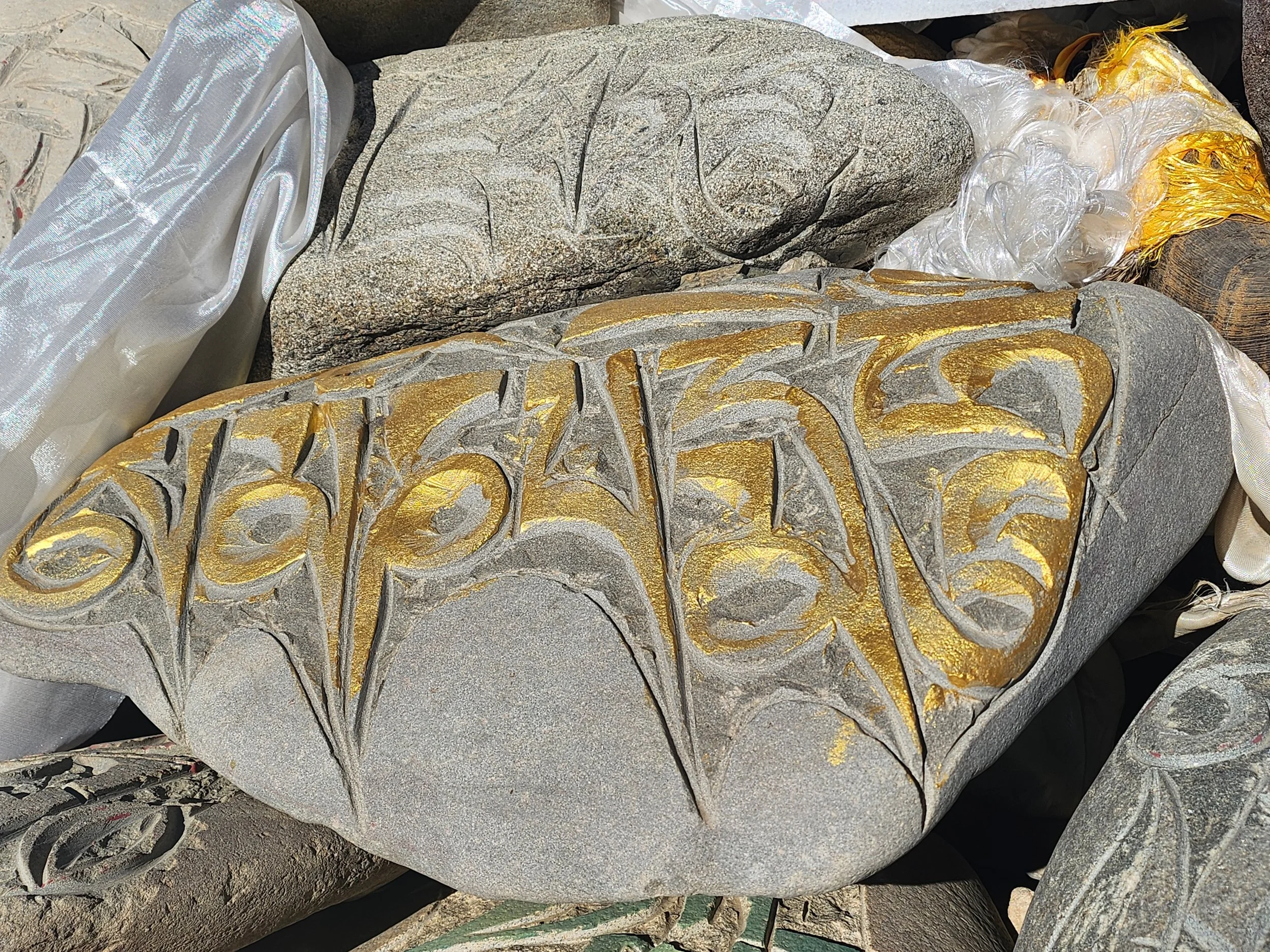
Mani stone at the foot of Kailash
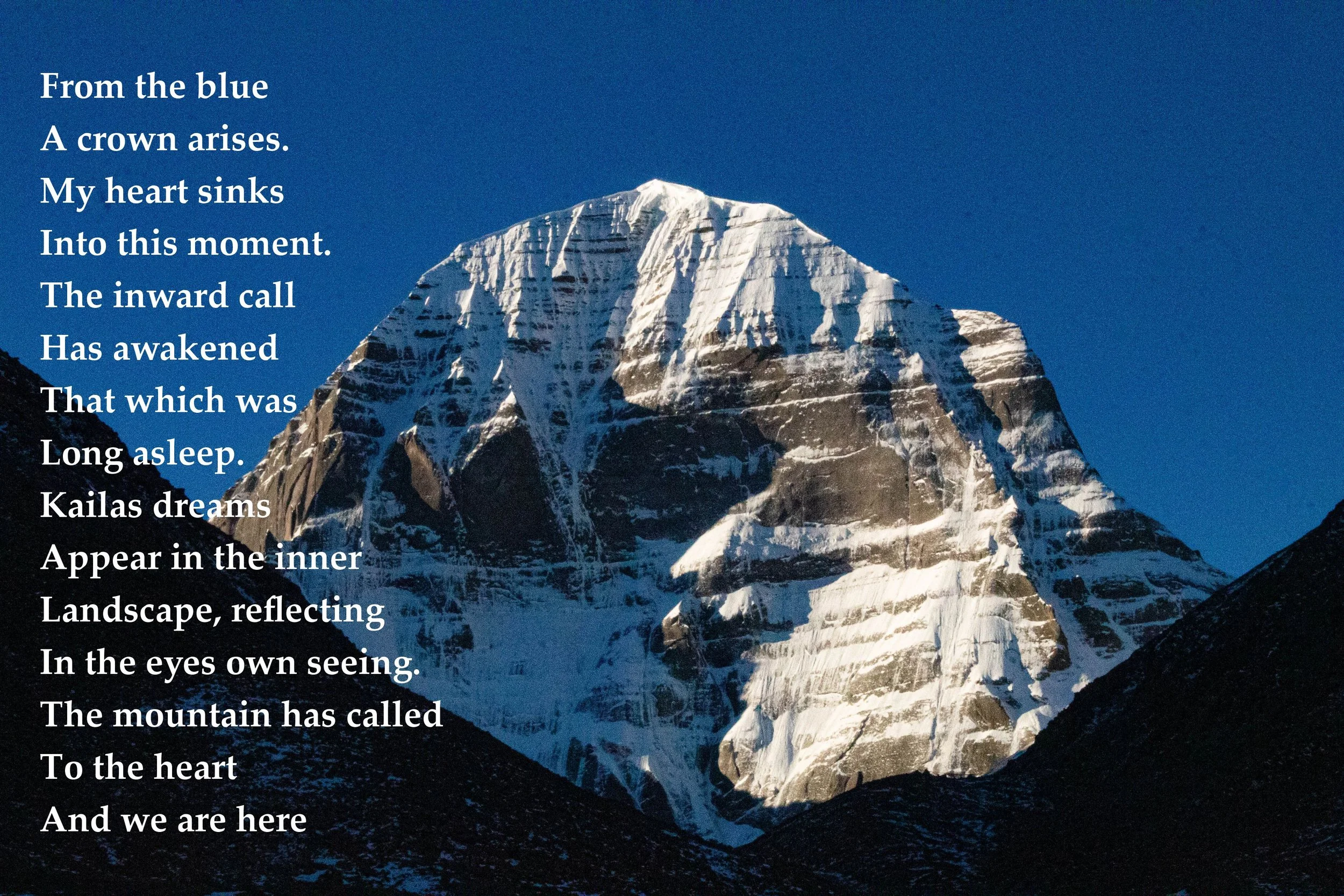
Known as the axis mundi the centre of the world, Kailash has drawn seekers to its majestic presence for thousands of years. Its location is said to be same distance from Stonehenge (in the UK) as it is from the North Pole, and also the location is twice its distance from the South Pole as it is from the North Pole. The significance of this is unclear, but it may hold a clue as to the power that one feels when standing in front of the mountain.
Kailash sits alone at a distance from the Himalayan Range. A holy mountain, it is revered by Hindu, Buddhists, Jains and Bon (the shamanistic faith of Tibet prior to the Tibetan adoption of Buddhism, that still exists in pockets today).
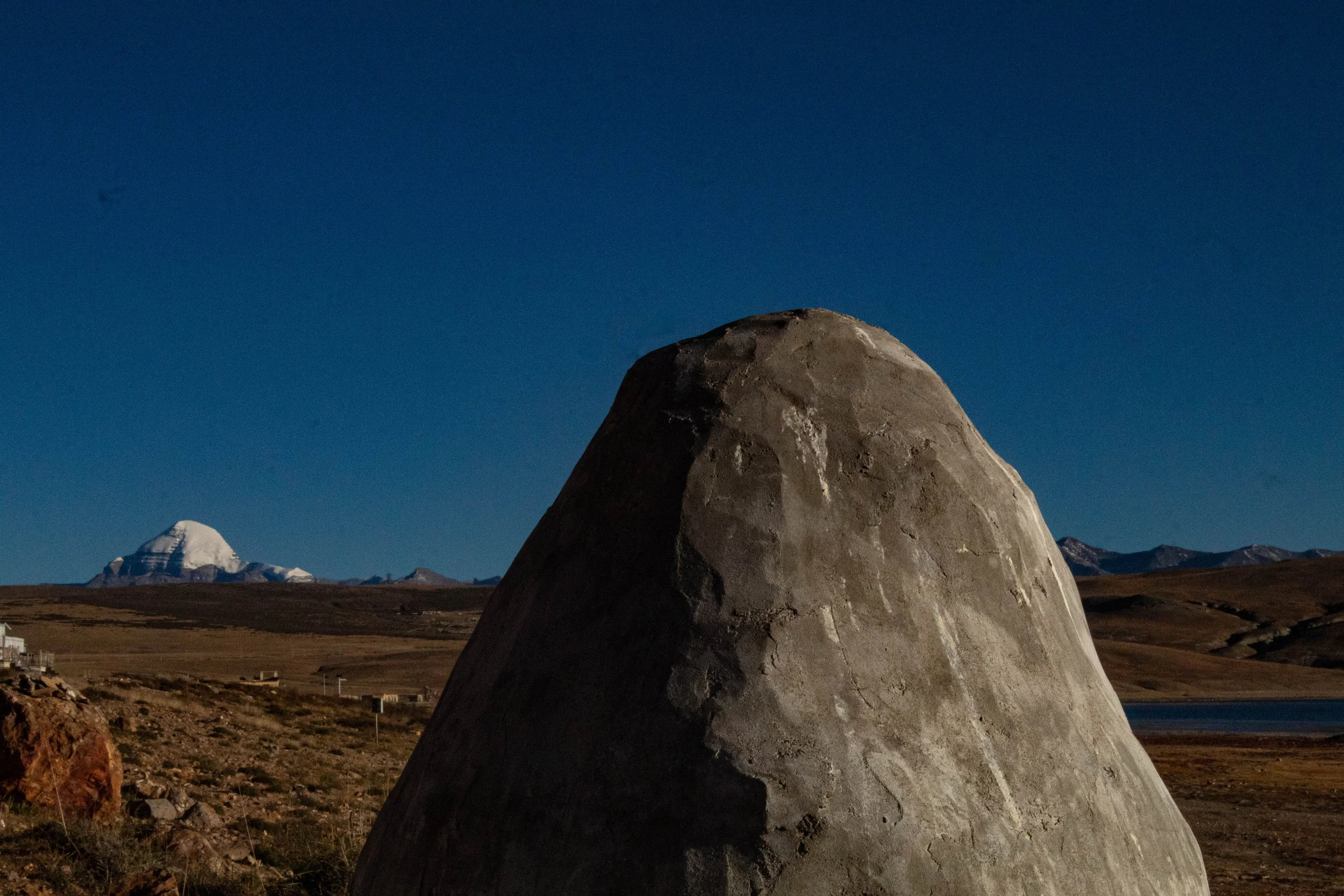
Stupa at Manasarovar with Kailash in the background
The Purusharthas represented in the faces of Kailash
“The four purusharthas are dharma, artha, kama and moksha. They have been listed so, in that order, on purpose. Dharma (righteousness) has to direct and control the process of earning wealth (artha) and moksha (liberation) is to be the regulating factor of desire (kama).”
All desires that do not subserve the one supreme need for liberation are to be given up as beneath the dignity of man. So, the Adhyathmic (spiritual) basis of dharma and moksha : as to be the root of both artha and kama. Without it, earning degenerates into plundering; desire degenerates into death. Sathya Sai Baba
The four faces of Kailash speak to us of this great teaching. As we travel around in the kora, we begin to see the ways in which the purusharthas are reflected in the process.
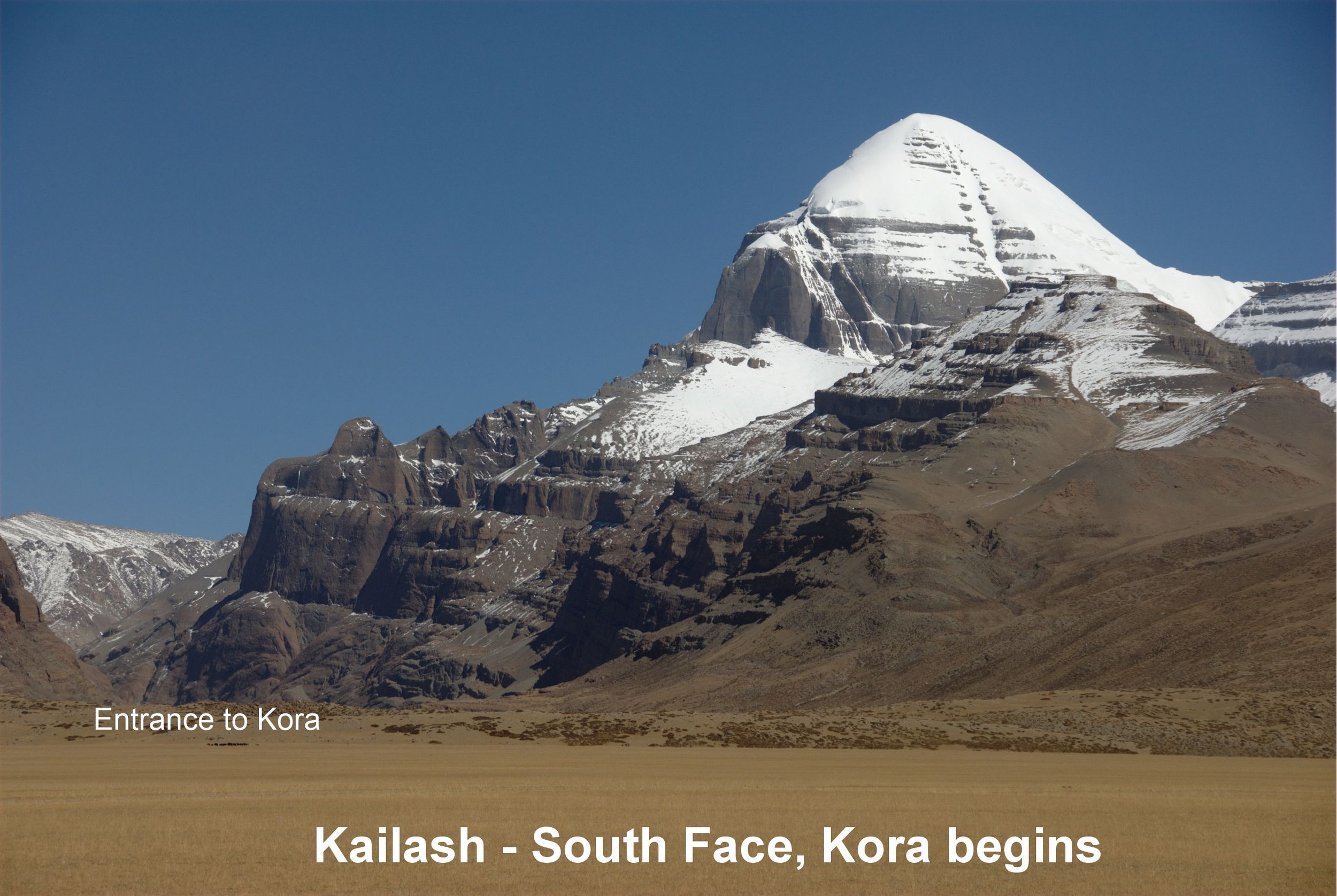
As we begin the kora (circumambulation) of Kailash, the first face we encounter is the south face. This face exudes the energy of sapphire. The South Face of Kailash appears to us again as we end the Kora. This face represents kama – desire. Our desires, as Sai puts it, can lead us to greater bondage (through attachment – see January 26 newsletter) or freedom, where we are not bound by anything. As we start the kora our anticipation is high. We have been led here to this mountain by a deep desire to come closer to the Divine energy that Kailash embodies, a desire for freedom from the limited – to emerge into the limitless infinity that is Kailash.
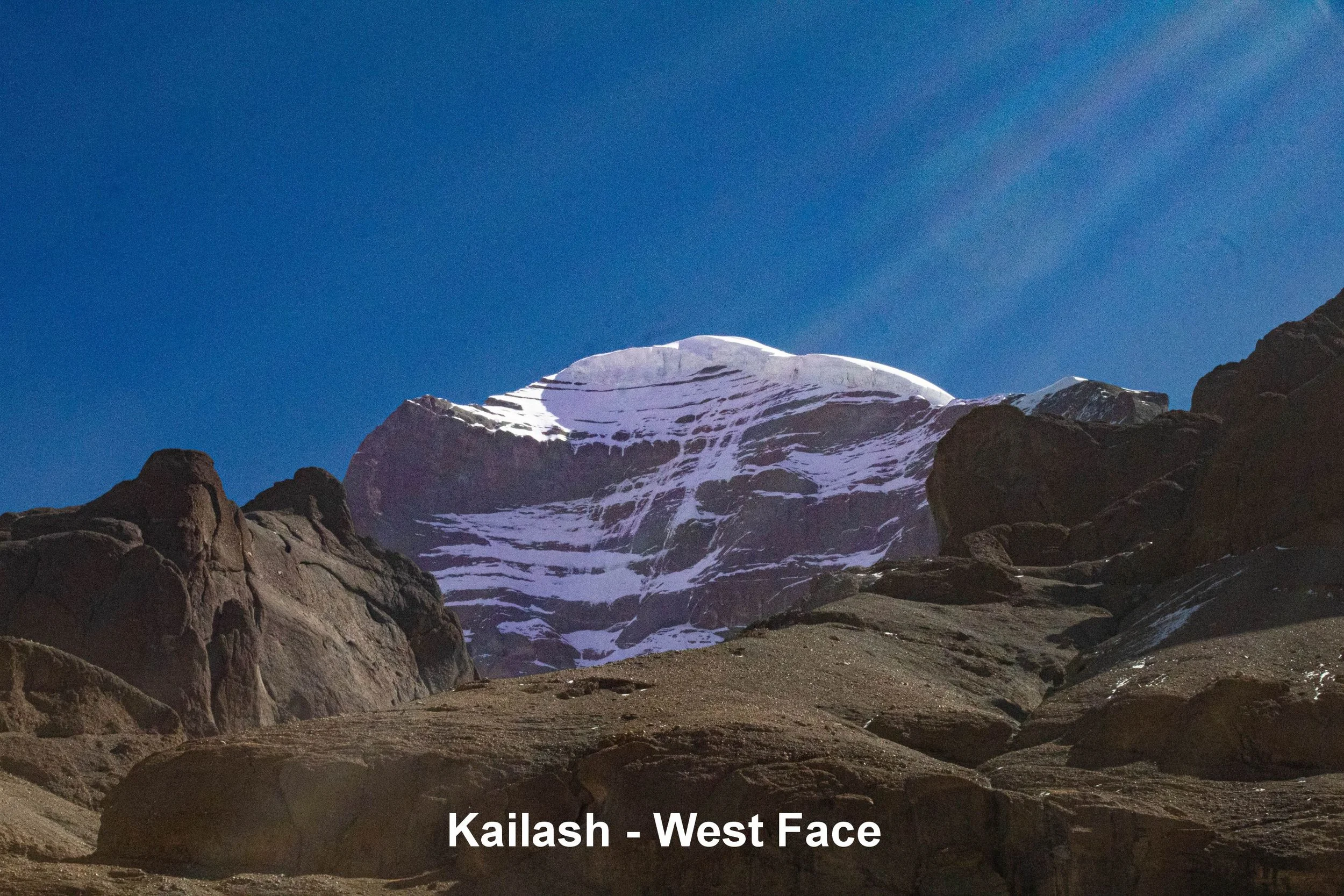
This face is termed Ratnaraj – the ruby face. It symbolically represents Artha (wealth). As we travel through life we begin to accumulate material possessions. Some a requisites for living, such as a house, car, etc. Money is required for food. What Sai is saying is that it is how we acquire these possessions and money that determines if we are living in truth, following the dharmic way. We start the kora with the longing to experience the full power of Kailash. However, as we walk the kora, the altitude begins to exert its efforts to defeat us.
We come to the mountain rich and poor in material wealth, holding on to our ideas and conceptions, but Kailash has a way of inducing deep surrender. One of the means he uses is to give us the challenge of altitude. Passing the west face, I experienced its effect. I became slower, slightly delirious and weaker. My O2 became very low and our guide was sure I would not make it to Dira Puk (on the north face). I have experienced altitude many times trekking up to Tapovan and other places in the Himalayas and knew that I had to go deep inside myself to find a place where it was just me and the mountain, locked in an intimate conversation. I knew I would be all right, but also that I had to surrender to what is, not try to be a superhuman who could conquer everything! I drew inspiration from the local Tibetan people who circumambulate the mountain by prostrating and carried on walking, step after step, no other world outside of the mountain and the moment. It was a struggle, but somehow this body made it to Dirapuk – somehow, I had met the challenge of the mountain.
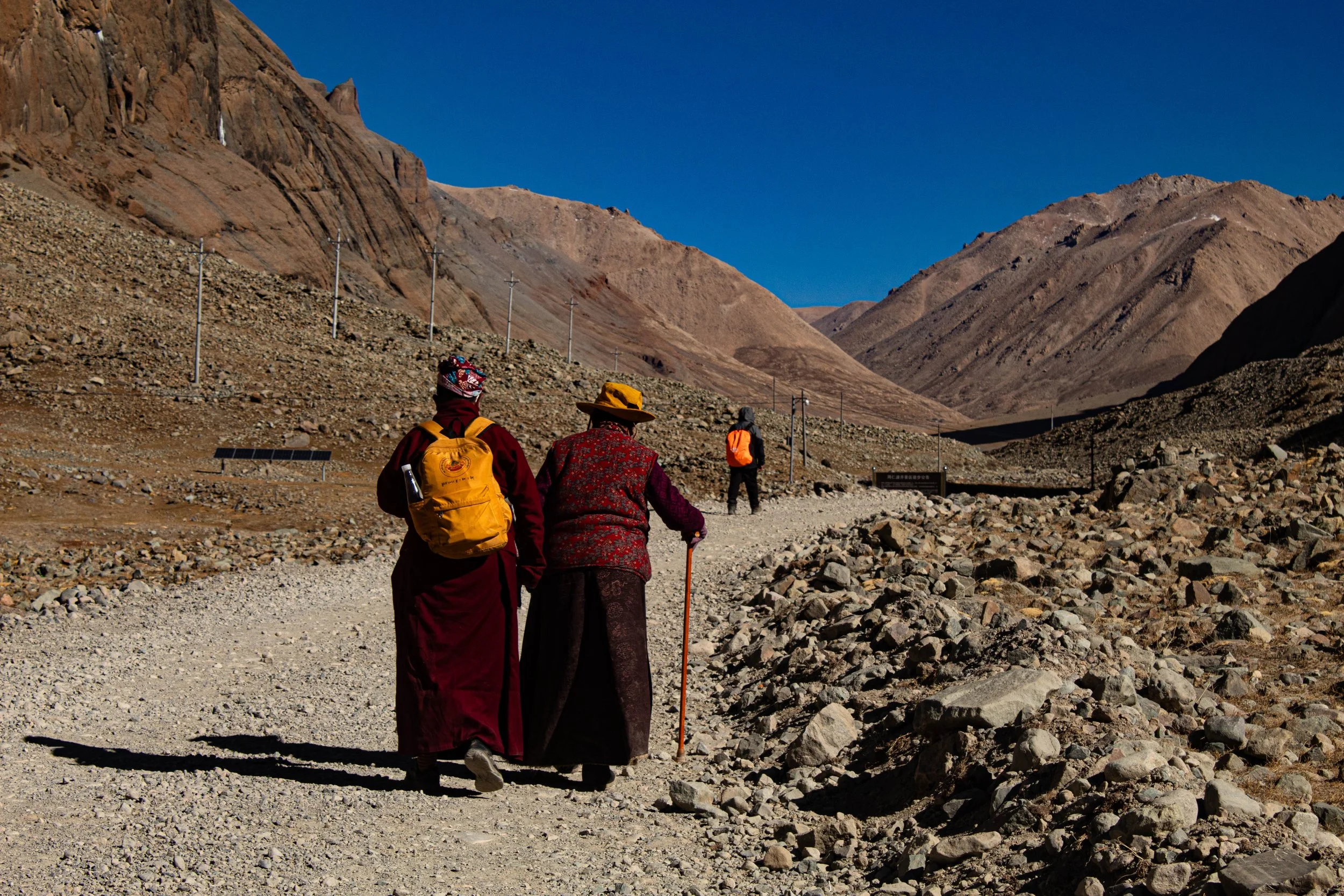
Pilgrims undertaking the Kora
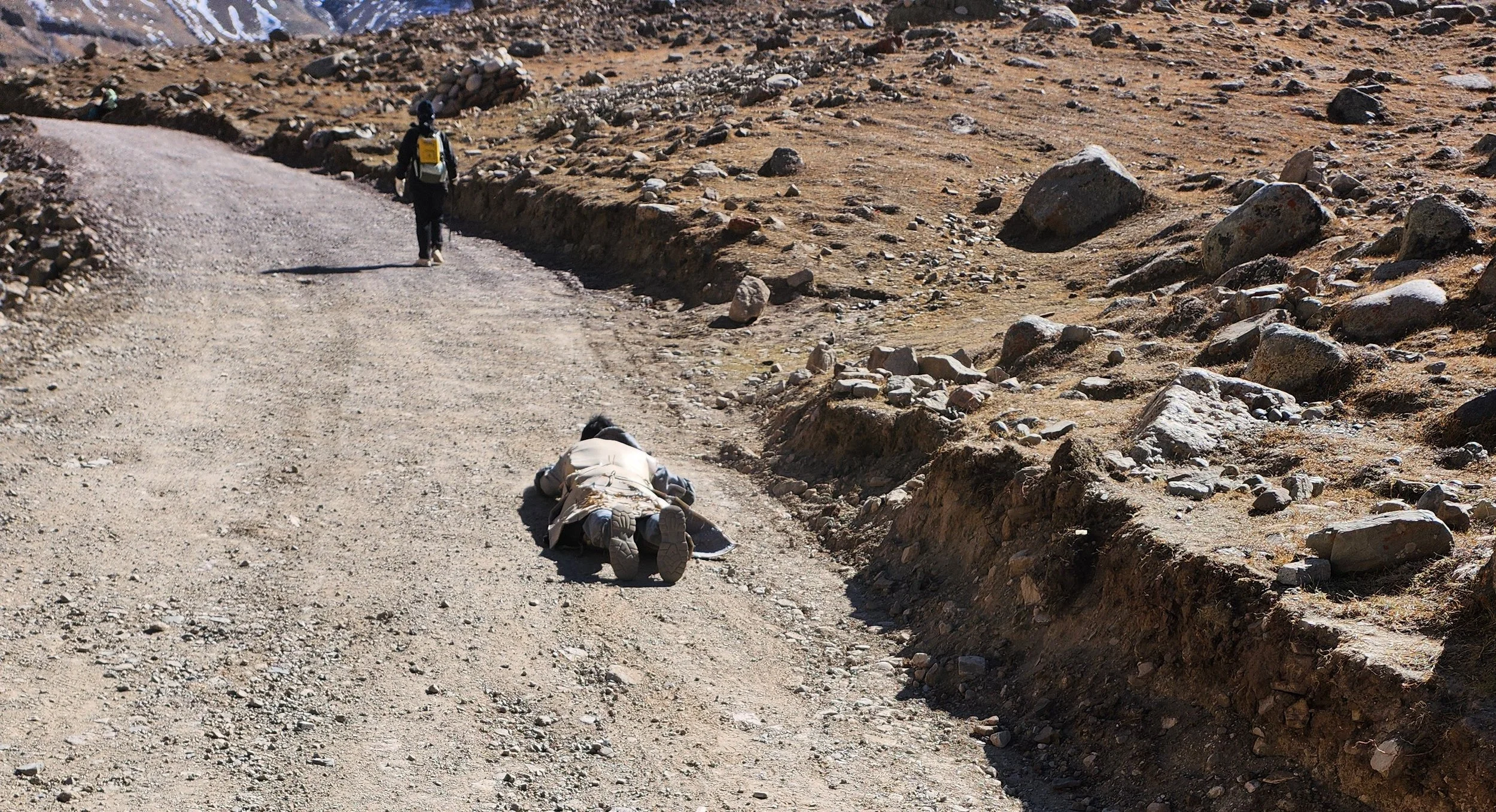
Pilgrim undertaking the Kora by prostration
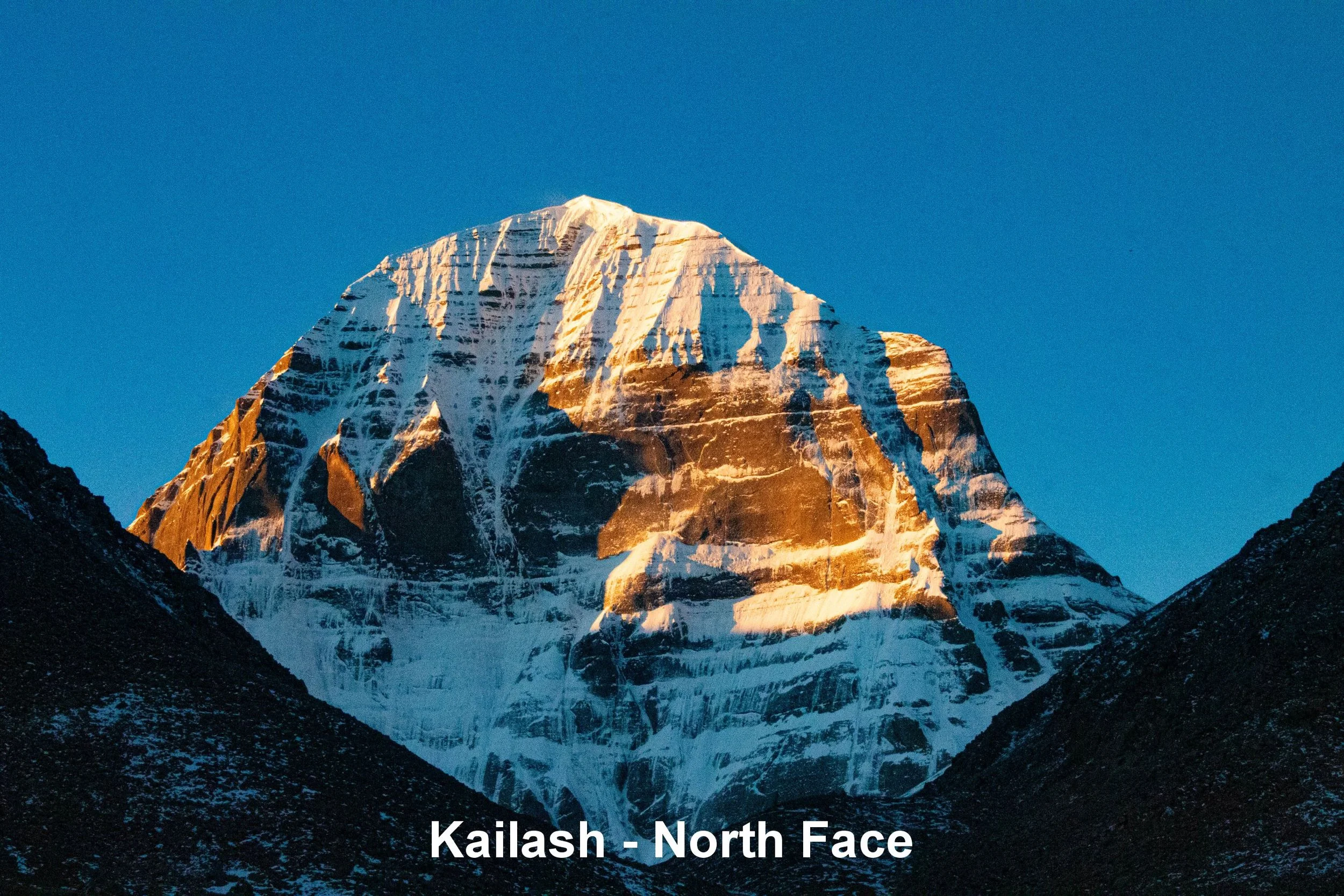
Once we had come to the north face we were awe-struck by its power and presence. Here Kailash invites us into His mystery, His other-worldly nature.
This aspect of Kailash is Hiranya – golden face. This is particularly evident in the morning when the sun strikes the near vertical slope. We are taken into a place inside ourselves where there is only the truth. Despite being very altitude affected, I still absorbed the divine vibrations that took me into another place within.
Here we rest and contemplate our lives, going deep within to the centre of our being to find our truth, our dharma. Dharmic thought and action arises from meeting life with the fullness of our very being – meeting the need of the hour. Despite our guide having deep doubt as to whether I could ascend the pass, I found a place of surety wherein I know the mountain had accepted me and all would be well for finishing the Kora.
The true wealth is the gold that lives inside our hearts. When we align with our dharma that gold reveals itself. It is in that place we are able to achieve our true destiny. For me, on this pilgrimage, was to complete the kora. For that to be achieved I had to be able to trek over the high pass of Dolma La (the pass of the goddess Tara).
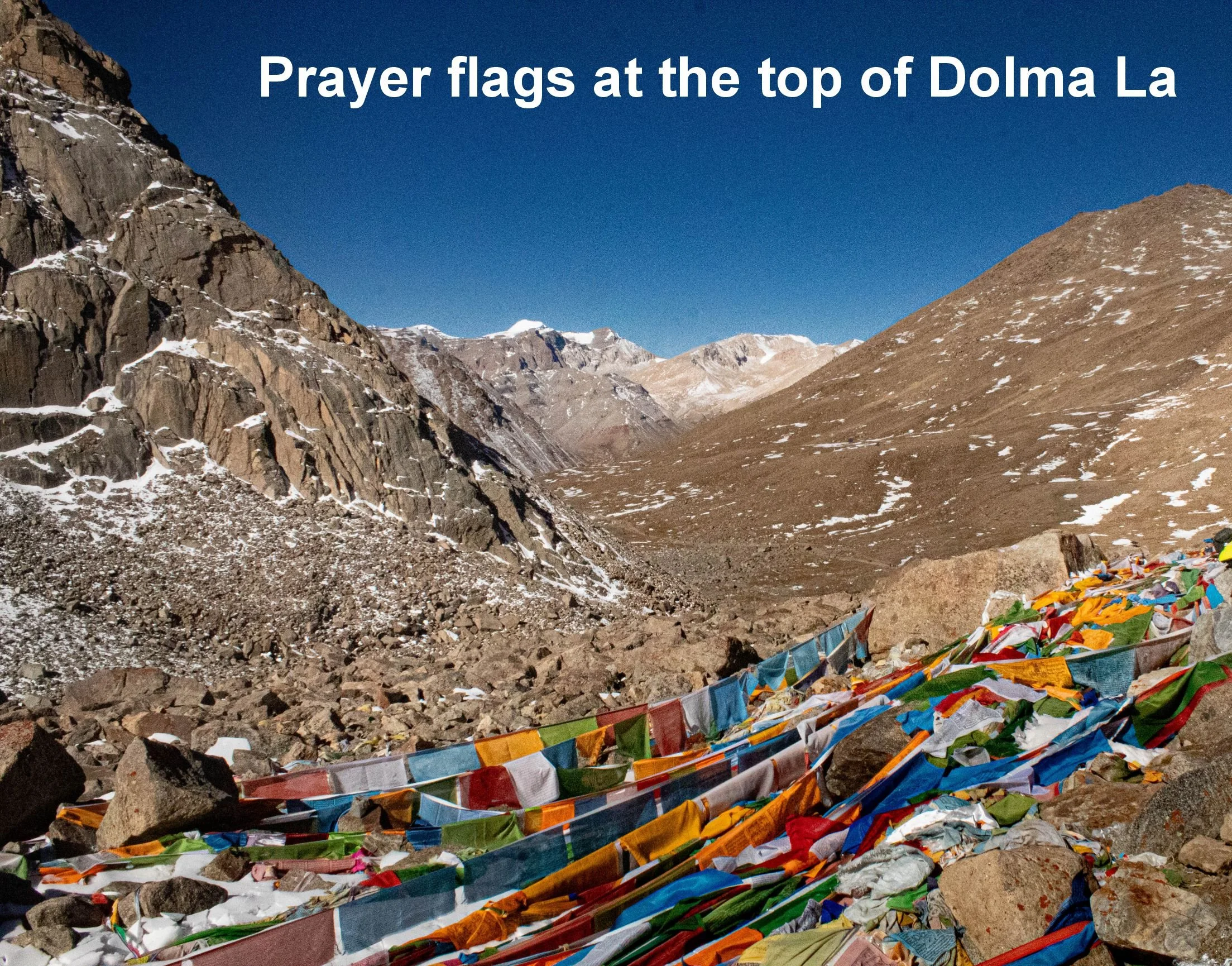
The Dolma La pass is the testing ground of all pilgrims who wish to complete the Kora. It is here that we experience the limits of our physical, mental and spiritual strength. After having altitude for the first two days, I was feeling a lot better and the pass, albeit difficult was not so much of a difficulty. The name of the pass is the Tibetan name for Green Tara, who embodies compassion and wisdom. In our journey over the pass, I somehow felt Her presence deep within.
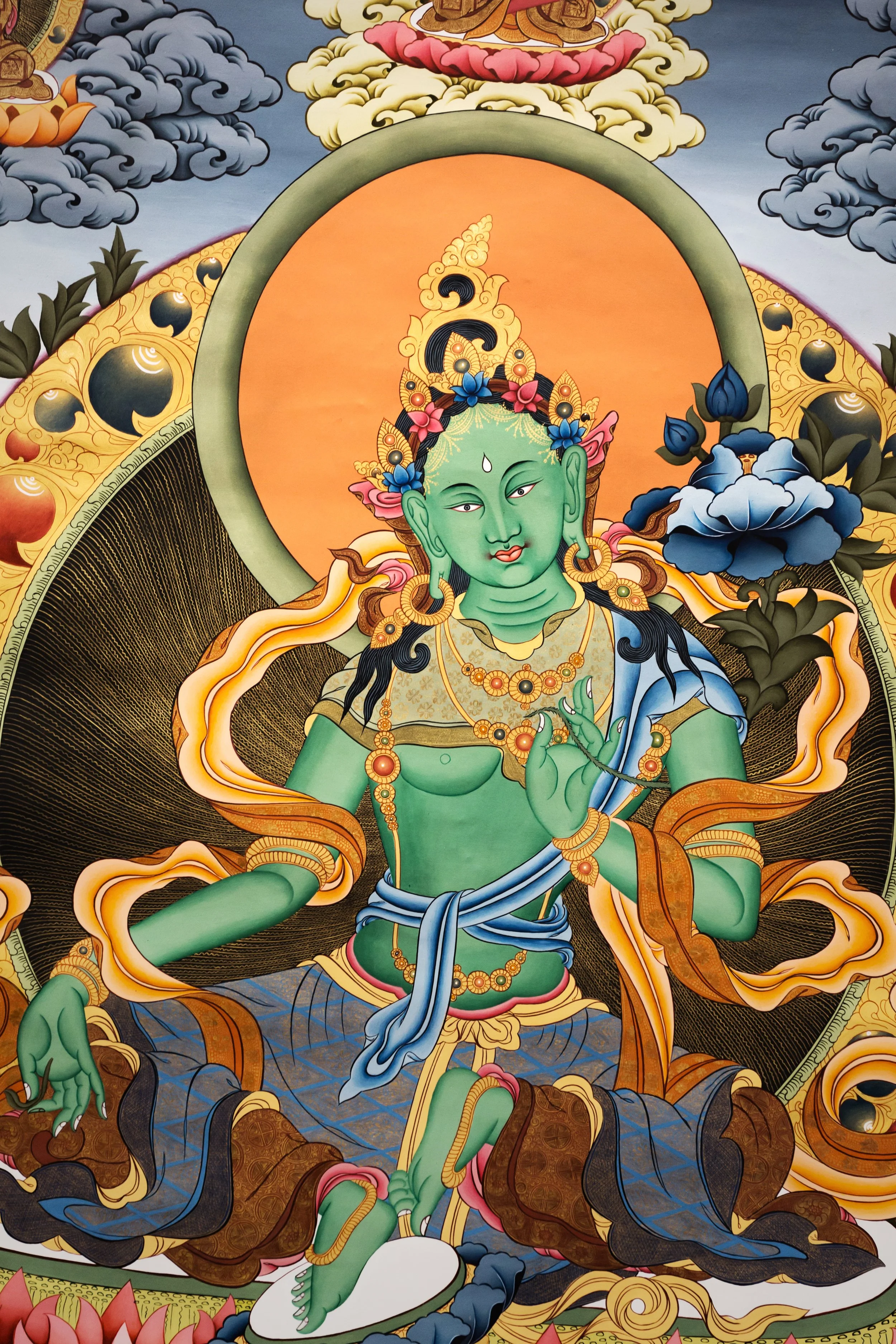
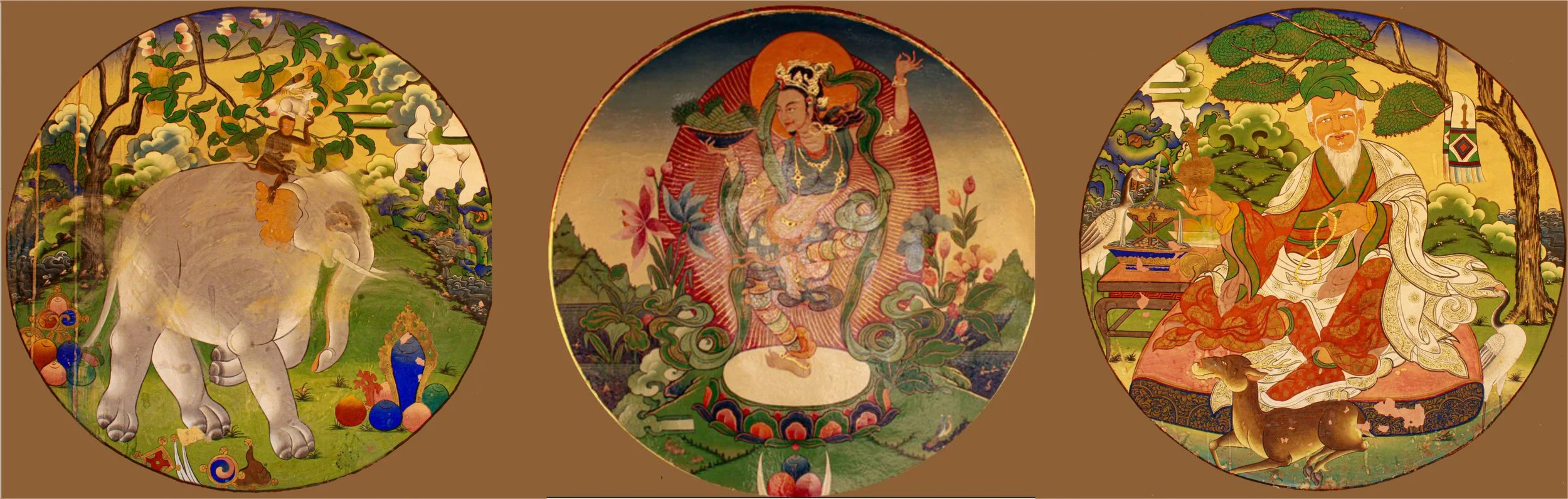
Green Tara - Thangka Painting
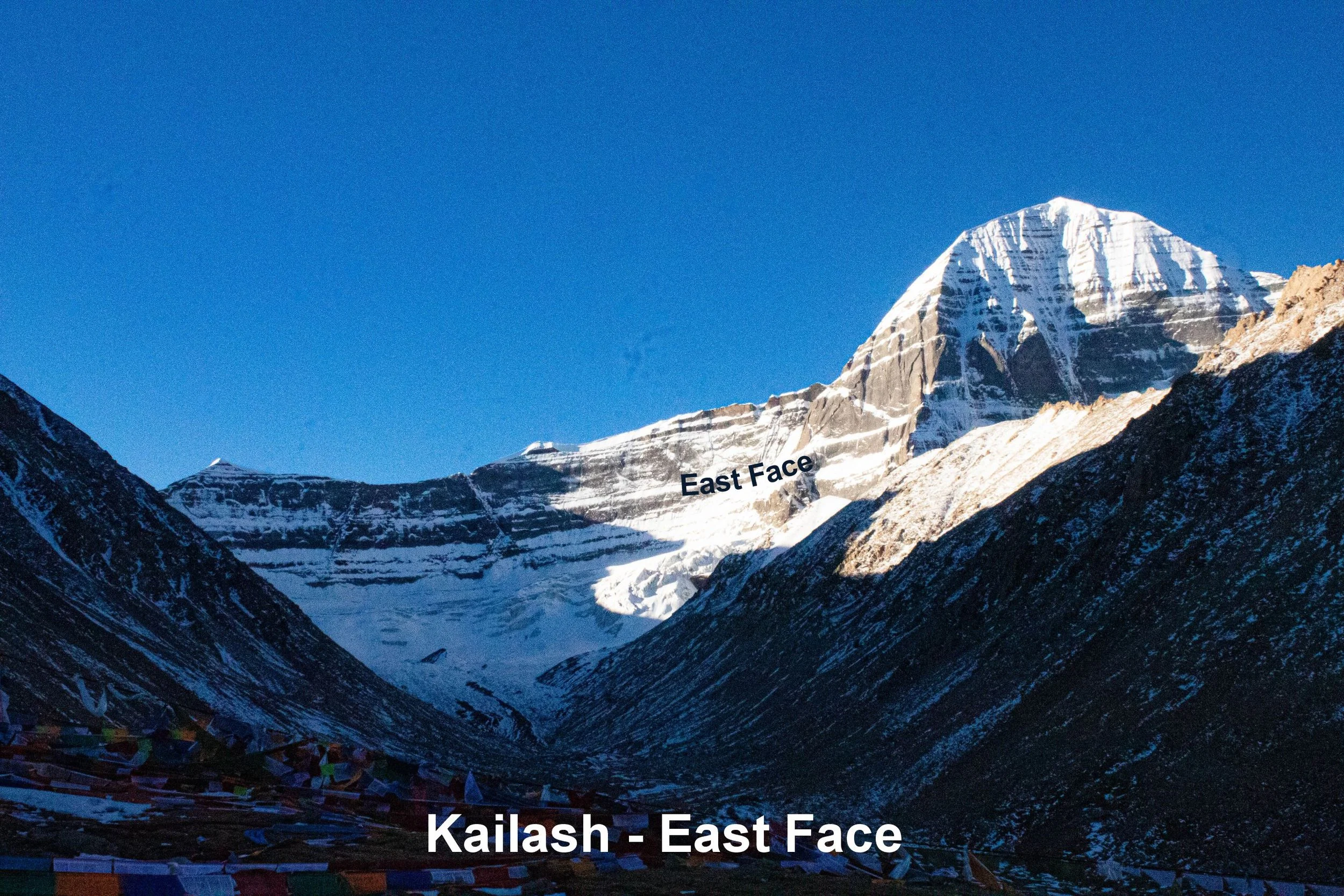
As we make our way over the Dolma La Pass we observe the East Face. It is possible only to see this face in one area of the trail, that shows where it abuts the North Face. This face exudes the energy of white crystal quartz – sphatika and represents Moksha – liberation. We have travailed over the pass and descended into the valley on the eastern side of Kailash. We travel through life after life, traversing the heights of pleasure and pain, which are represented by the difficulties of the pass and now we finally let go of the struggle, becoming the place of beingness within the heart – liberation.
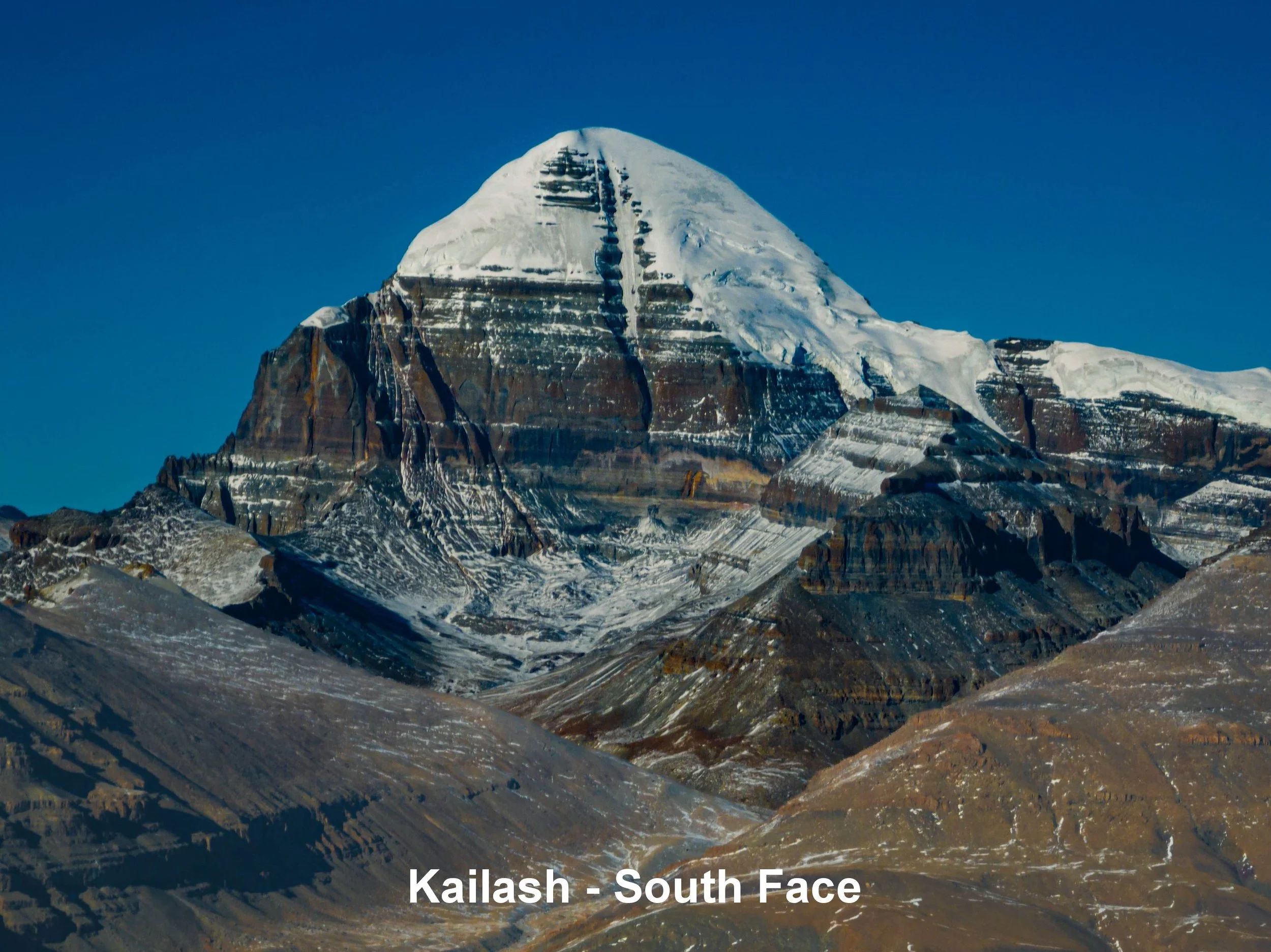
We finally reach the end of the Kora and emerge back into the world. It feels like we have been shaped by the mountain, so that the world no longer appears to us as solid and predictable as it was when we started.
We started the kora with conceptions of reality, of how life should be. We have not conquered the trail or the mountain. The mountain has rather somehow entered our hearts, and we carry Kailash within us as we turn and face the world with a new perspective – that which shows us that our conception of reality is now one of unity, harmony and love. - Satyavan