Kia Ora Whanau,
This month we dive into the depths of spiritual practice to explore a subject that is often misunderstood, with a title that is often misused. We will explore what surrender is and what it is not, as well as investigating the role of surrender in spiritual evolution.
What is Surrender in a spiritual sense?
Surrender is often considered a passive process. We see surrender on the battlefield where one opponent gives up and surrenders to the other side. We see it on the sports field where one side gives up trying. We see it in business where one competitor surrenders their position. We also see it where a criminal surrenders to the police. Can the type of surrender in these examples translate to spiritual life?
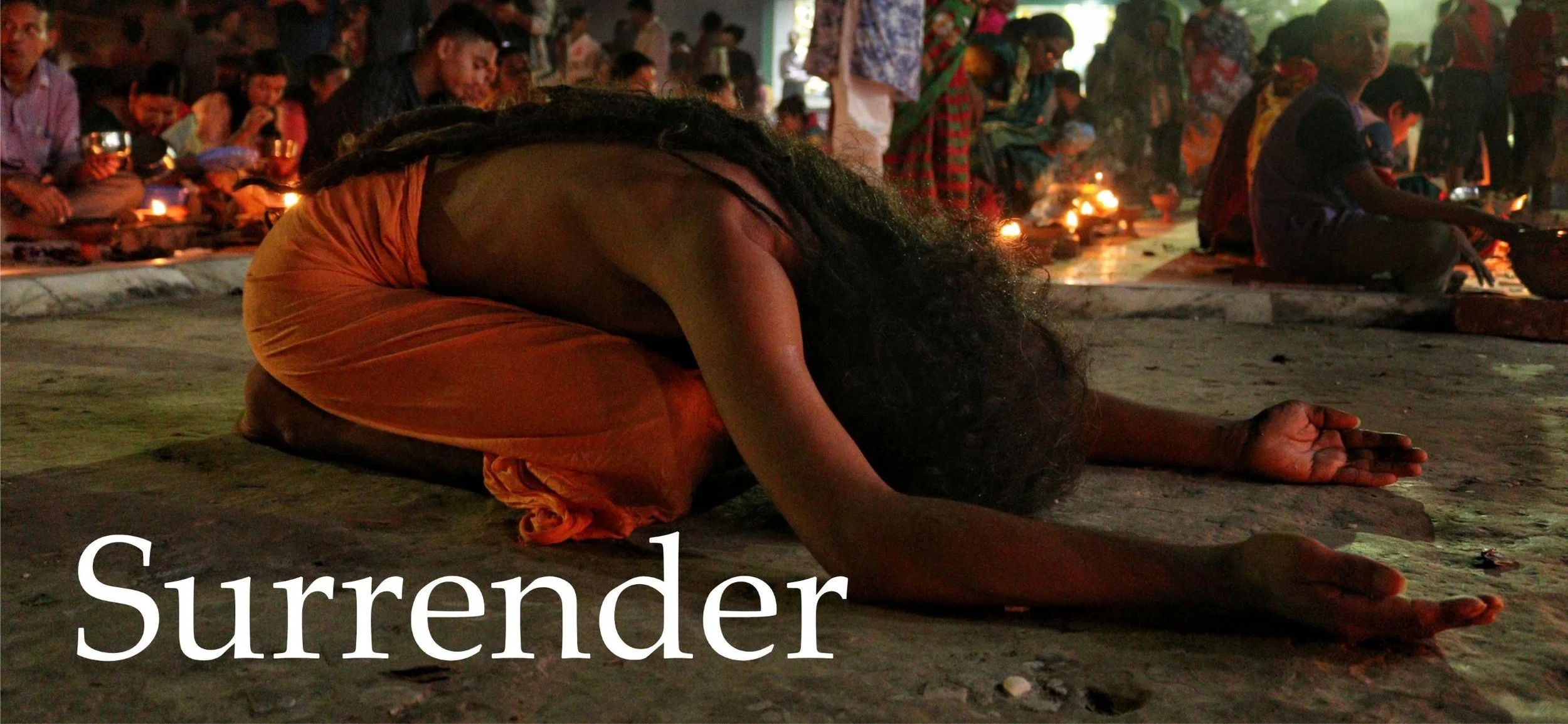
Surrendering to the Divine or a higher power evokes a picture like the one above, somehow bowing deeply to a deity. But the physical act of bowing down is not really surrendering. A good analogy for what spiritual surrender is could be a criminal surrendering his/her ill gotten gains over to the police. In a spiritual sense, what are those ‘gains’? Who surrenders those gains? Master Sundareshwara explains beautifully. “First ask yourself, who is it that surrenders? Who is the one who undertakes the process? Truly, surrender is a process of moving from the identification as a separate entity who worships the divine to becoming the divine itself.” (inner message)
This wisdom implies that true surrender is an internal process. The external surrender must mirror the inner impulse to cede control of our mental perception of who we are to something higher within us.
Does Surrender mean you lose your individuality?
We are all born with a personality. This personality changes over time, but we never stop having a personality. The great masters and enlightened ones retain a vestige of personality after awakening to their own Oneness with all. Sundareshwara points to what occurs after we surrender our sense of separateness, and how the personality coexists with that space.
First, there is a letting go. What has to be let go? The sense of being unique. Wholly you and nothing else. In today's world, everyone wants to be unique. There is a worldwide culture of the individual. The process of surrender begins when you give up the notion of wishing to be a unique individual. This does not mean that you give up having a personality. No, this means that you recognise that there is something more to you than just the personality. So, you begin the inquiry into what is underneath that personality, what lies beyond the personality. For this stillness is required. Then the inquiry, must take place outside the mind. For the mind is identified with the personality and cannot shake that identification.
The inquiry takes place in the heart, which has no such identification. Let the mind settle in the heart. Let the cacophony of thought slowly become still enough so that you can begin to shift the identification from mind to the purity of awareness which is beyond mind. The personality is not lost, just absorbed into awareness.
Then the inquiry deepens, slowly and surely, until the self is revealed.
As you emerge from this state, the personality appears again, but your identification with it reduces. Surely the process is repeated until you lose identification with the personality. Not the personality itself that remains. It is the identification that is surrendered. Sundareshwara
Are there any steps in the process of surrender?
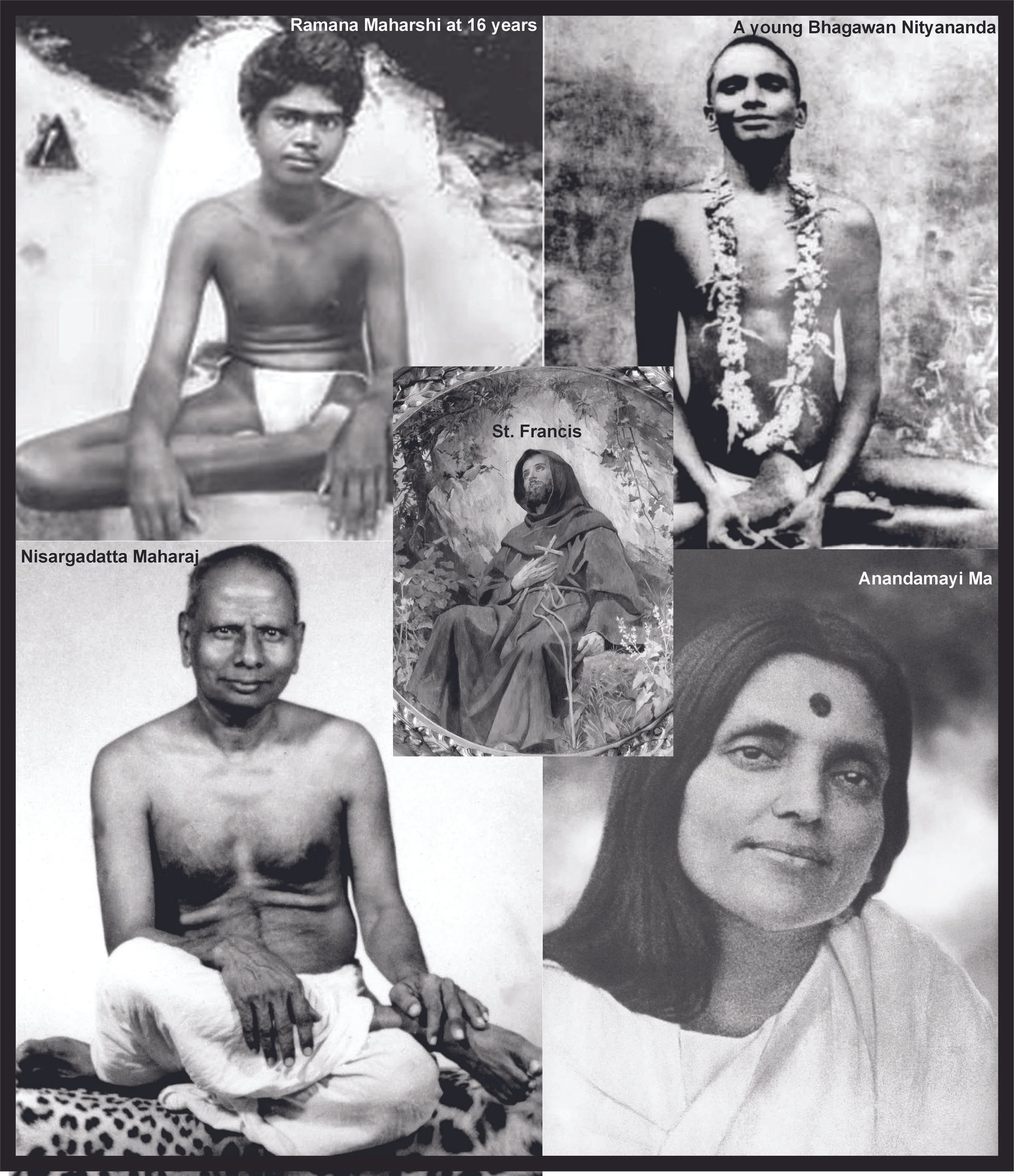
Giving your separate self over to the universal Self or Divinity rarely happens instantly. There are a few individuals who have experienced that, such as Ramana Maharshi, Bhagwan Nityananda, St. Francis of Assisi, and Ananda Mayi Maa, most people undertake a gradual process of disidentification with the separate self.
Sai Baba has this to say regarding that process.
You are not one, but three. The one you think you are, the body, the one others think you are, the personality, and the one you really are. Atma1.
As you begin to inquire deeply, the feeling that you are the body is surrendered. This is a process. It starts when you begin to sense that you are in a body [not the body itself] but that body is a vessel. After some time, the senses of the body exert less control. Then the feeling that this vessel [the body] is sacred arises, for the body is a sacred vessel full of the nectar of Self. [In this process] each cell becomes divinized. You have surrendered the reliance on the physical and ceded that reliance to the sacred.
Then the body performs its real function of being a receptacle for the Atma. The nectar of immortality flows through. Not that the body is immortal, but the one who inhabits the body [the Self] is immortal. This is a graduated process and takes time, but it is a necessary process.
The question of personality comes next. Surrendering the personality is the same as surrendering the ego. The two are not separate, just different names. This is a crucial step in the process and should not be rushed. Otherwise, you simply become a characterless person with nothing to offer the world. Surrendering the personality or ego involves the same [process of] detachment as the body. Gradually, you realize that the personality is also a vessel. Therefore, you need to let go of our complete identification with the personality/ego complex. Again, detachment from this identification occurs gradually, until you know yourself beyond limitation as the limitless one. Paramatma2.
Along the way, the ego begins to step aside and the Atma is known. That is surrender. The scriptures [also] talk of jivatma3. This is a stage. You know you are the Atma but still have some differentiation, some sense of separateness. This too has to be surrendered.
This [last] process is not gradual. The spiritual sadhana4 leading up to this point must needs be gradual and steady. The final blossoming of the knowing that you are the one Divine - God happens instantly. Surrendering the ego is essential for this [step]. However, you will still be functional in the world but without entanglement. You will still have a personality, but you won't identify with it.
Sadhana is a lifelong moment by moment endeavour. Even when you have realised your Oneness, each moment is surrendered to the next in a beautiful stream of unity, of love.
1. Atma can be loosely translated as soul
2. Paramatma is the Over-Self or the Divine
3. Jivatma is the soul that still has some individuality
4. Sadhana is spiritual practice that allows for realisation of the Self
What is clear is that our sadhana needs to become a 24-hour, 7 days a week practice, not simply a few minutes or even a few hours of meditation. Self-Inquiry can become a habitual stance to life. Our thoughts, words and actions can be filtered through the lens of Self-Inquiry as we progress towards greater breadth and depth in the process of surrender. I would go so far as to say that Self-inquiry is actually the process of surrender. For as we let go of false identification, we begin to surrender ourselves to the fresh perspective and each moment is a renewal of the way we relate to ourselves and the world.
How can we deepen surrender?
“First you must take time to abide within. Give space where you can move the focus off the mental and physical and drop into the ocean of consciousness within. Then to abide in that still stillness and allow the heart to open to my true reality.
Knowledge will awaken for all knowledge; all truth resides in that place. Do not allow a day to go by when you do not take the space to dip into the source. Surrender is the process of opening yourself to this ocean of consciousness, this ocean of beingness. For you have relinquished the hold of the mind and emotions, the body identification.
So take some time every day to surrender to your deeper nature. The I am understanding will arise and the deeper elements of the love between you and the Divine will emerge.
Only then can you truly become a servant of God, for there will be no difference between you and Brahman (the Divine Consciousness).” Sundareshwara (inner message)
What Happens When We Truly Surrender?
When you are atma in essence, how can atma (Self) offer itself to itself?
Sathya Sai
It becomes clear that our notions of what surrender really are need radical overhauling. When we truly do not understand what it is that we are surrendering, how can we undertake this process?
As we have seen, letting go of false identification is the true process of surrender. We give over nothing, for there is a nothing really to surrender other than our delusion that we are the body/mind complex. By surrendering we lose nothing but that identification, which truly was not real in the first place.
We then begin to live in a space, to think and act from a space that is empty of the illusion of separateness. It is a space where there is only the present. The past and the future are known only to be mental constructs. Naturally, that idea is a difficult one for the mind to grasp, for it the mind that creates the concept of past and future. We begin to live in the present moment. As Sai states, “each moment is surrendered to the next”.
As a friend of mine once put it, “May we all lose our mind.” - Satyavan